Tag Archives: Books

My Heart is a Drummer

My good friend Adam Sydney is officially a published writer, and with his second book, My Heart is a Drummer, he explores ♥love♥ the only way he can: weirdly. Adam will choose two lucky ecopy winners, one for My heart… and another for Yolanda. Good luck:)

The structure of My Heart is a Drummer is nothing like I’ve ever seen before – what inspired you to write this particular story this way?

Read it, it’s excellent.

AS: I wrote the first draft chronologically, but as this was the first draft of the first real novel I’d ever written, I wanted it to feel fresh and spontaneous. Consequently, I wasn’t writing off of an outline, which for me, I’ve learned, leads to very leaden, predictable writing. So everyday, I wrote for an hour or two, just plowing ahead on the timeline.

Sometimes, though, I’d run into spots where I didn’t know what was going to happen next. For some unknown reason, I came up with this idea that at these points, I would write little scenes that had nothing to do with the story but would keep me writing and hopefully open my stuffed up brain passages. This actually worked for me.

For the next draft, I decided to take the week that I’d covered chronologically and regroup the scenes into chronological order for each character. So we cover the week with Lourdes’ POV, then we cover the same week again with Eric. For me, this kept the story from revealing too much information too soon, and it also kept the story more firmly focused on the people around Donald and how he affected them, rather than on him.

I don’t know why, but I left in the weird little scenes that I’d written basically as exercises– and lo and behold, people weren’t incredibly annoyed by them! I was surprised, but glad, because they ended up feeling to me as if they were sketches of some of the people who might have benefited from knowing Donald if they’d just lived in his part of the world and/or in his time. But maybe I’m justifying?

You’ve lived in London, LA, New York, but you always write stories taking place in rural nowhere kinda towns…why, Adam Sydney, why?

AS: Wow! No one’s ever asked me that one, before, either! I can see how someone could really get properly cross-examined by a friend who knows them well. I’ll have to behave myself, or you’ll ask me a question that might really expose the darkest recesses of my psyche…

But it’s true, I’ve lived in a lot of big cities– and some smaller ones, too. The setting of My Heart is a Drummer is more suburban than anything else, I think. Montclair, New Jersey is in the metro area of New York City. But I grew up in small towns– maybe that’s it? Although I’ve never consciously avoided writing stories set in large cities, now that I think of it, I get nervous at the prospect. Lots of people will know the place well, and if I don’t represent the city in the way that they’ve experienced it, maybe I’m worried that they’ll not feel the story is as authentic as it could be.

This might also explain why I set my stories in places that I’ve never been to, before. I’m not personally a big fan of fiction that seeks to capture a place; I’m a story man. It’s the background in screenwriting, I guess. So I get a little bored when a novel spends ten pages describing a room or a street. I don’t think there’s anything wrong with that, necessarily. I just prefer to get down to the nitty-gritty of character and action.
Do you believe writers pour pieces of themselves in each work, and if so, what’s your piece in My Heart is a Drummer?

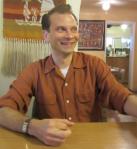
Adam Sydney, author

AS: I think that each and every novel is probably a piece of its writer. After all, we spend so much time with it, and the process can be very intimate. But my problem answering this question is that I tried to ensure writing My Heart is a Drummer would depend almost solely on subconscious creative decisions. So it must all be pieces of me; I just can’t tell you which pieces! People who know me well could probably answer that question better than I could. What do you think? What pieces of me are in there? I have to admit that I’m terrified of your response.

That being said, there were a couple of brief stories recounted in the book that I consciously put in there. They were based on reality, and reading over the book later makes me think that the personal reasons I included them make them weaker than other elements, perhaps. However, no one ever said that they stuck out or felt awkward or self-indulgent, so I’ve left them in.

If any of your readers take a look at My Heart is a Drummer, I’d love to hear what they think might be these factual stories!

So what’s next for you? Are you working on a new story?

AS: I think what’s now and next for me is going to be a lot of marketing for my books. People warned me that getting them published would be next to impossible, but marketing would be a thousand times tougher. So far, that’s turning out to be true. But I was a creative director at an advertising agency for a while, and my boss used to draft me to handle P.R. sometimes, so I kind of understand a few of the basics. I did threaten to quit the job if he me do any more publicity, though, to give you an idea of how I feel about it.

And I’m also working on my third novel, which defies categorization. It’s sort of an experimental, semi-narrative horror treatise on existence. Yeah, I’ll be raking in the dough on that one. I really enjoyed writing experimental screenplays because I’d rather try out a few things that I haven’t seen before onscreen and felt that if I did what everyone else was doing, someone’s probably already done it better, anyway. To give you a good idea of how twisted I am, one of my favorite authors is Faulkner. Of course, with the film industry, the chance that an experimental feature will be financed is pretty slim (I’d put a understatement emoticon here if they had one), so I’ve turned my attention to books. My first two are pretty conventional, but I started to get the urge to try some new things, hence Something’s Wrong. So far, I could only get three of my writing friends to take a look: two said it was profound, and one couldn’t make it through the first third of the book. So yeah, it’s going to be one of those projects. But I still plan on publishing it– mostly just because I can.

So if anyone out there enjoys experimental, semi-narrative horror treatise on existence, please do get in touch!

**Leave your comments, guys – you could win an ecopy of the book on Monday July 30th:)**


Michael Martineck’s AWESOME Stray Score

Writer friend Michael Martineck has been working on an awesome website and who to explain it best than himself?

As a species we’ve been ranking books since there were two.  One is always better or worse than the next, but that never told the whole story, so we invented genres.  Cubbyholes into which we can shove titles, twisting, bending or ignoring the fact that a few should be in several places at one time. (An unacceptable state for any bookstore or library.  There’s no quantum Dewey decimal system.) And that leads to StrayScore – a method for rating novels based not on quality or content, but on how far they depart from reality.

Every novel requires suspension of disbelief.  How much marks a difference that transcends genres.  There are novels based firmly in reality. The characters act as one might expect, going about their lives on planet earth, depicted with language you can easily comprehend.  Then there are novels in which multi-phase energy clumps blink light poems in a time and place outside of time/space.  The majority of most novels fall in between.  StrayScore takes the traditional parts of a novel (theme, problem, plot, character, setting, style) and asks you to rank how far from normalcy the author has stretched.  The total of the rankings produces a final score for the book.

And for you.  While most open-minded readers are capable of appreciating anything written well, by scoring novels you hold dear, a personal preference emerges.  When it comes to the novels we love, we all have a score.  Like one of those adjustable air mattresses.  Some of us like novels with a little bit of speculation, whether it be a glimpse of a ghost, the entrenchment of a dystopian society or a murder solved and killer stashed away for life without parole.  Once you know how much disbelief you like to suspend, StrayScore can help you find novels you might love, regardless of their place on the shelves.

StrayScore is about you and novels, and you and novels.  The more people participating, the better it works.  Please visit, sign up, vote on books listed, add books not yet vetted and tell us what you think. As in all things internet, there’s a big fat place for comments.

The genius behind StrayScore

Michael has written for DC Comics, several magazines(fiction and non-fiction) and two novels for young readers.  His novel for adults, Cinco de Mayo, (EDGEScience Fiction and Fantasy) was a finalist for the 2010 Alberta Reader’sChoice Award.  Michael has a degree in English and Economics, but has worked in advertising for several years. He lives with his wife and two children on Grand Island, NY.


I’m back…with Adam Sydney

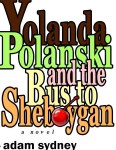
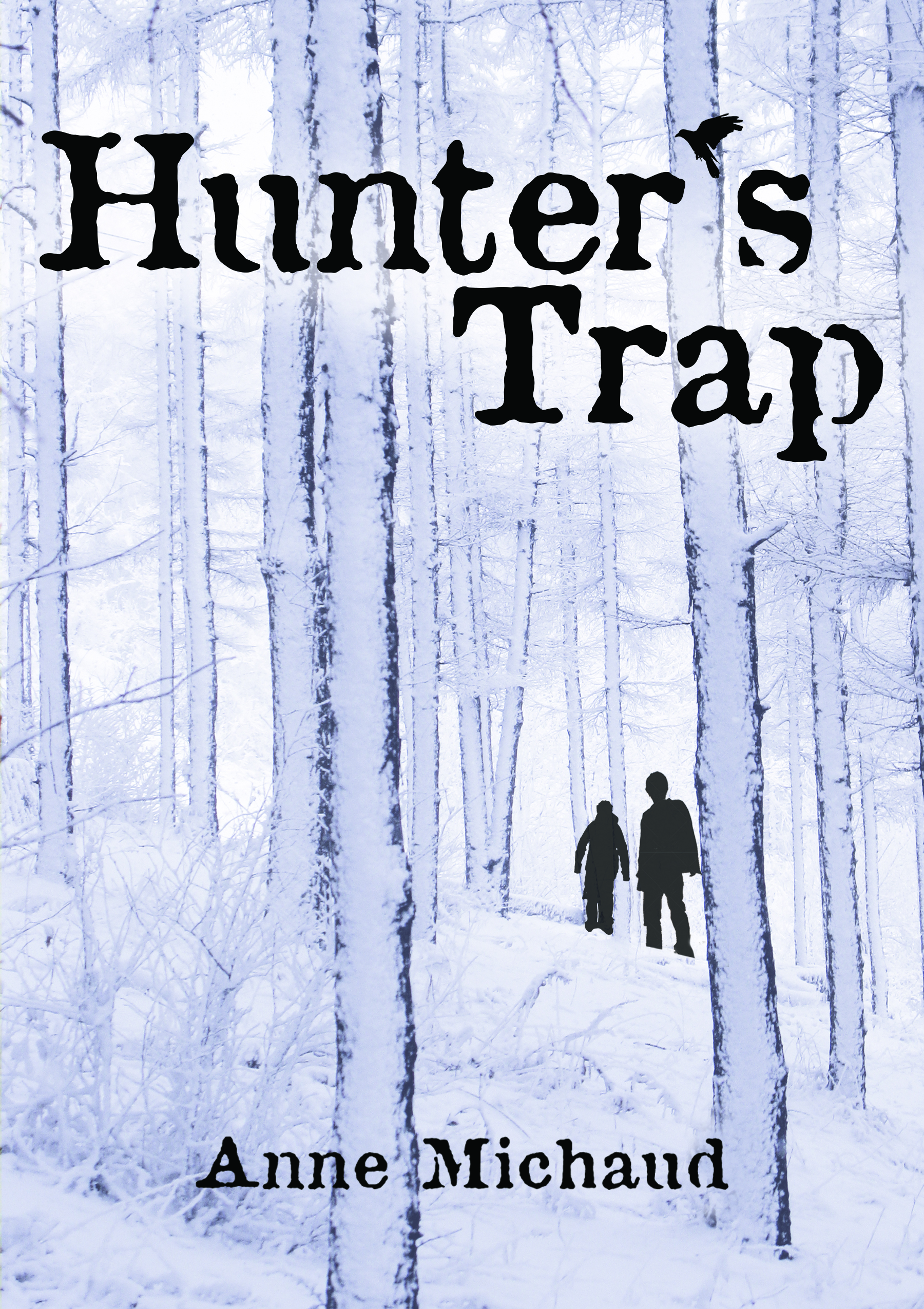
Hello people, friends and foes! What a ride writing Hunter’s Trap has been: fast, sometimes furious, most of the time scary, and always fun. I’m back for a quickie: a dear friend of mine has plunged into indie publishing and I had to share his wonderful books with you guys. So here is Adam Sydney and Yolanda Polanski and the bus to Sheboygan (come back soon for our chat over his other book).

me: Hello Adam, welcome to your first interview. Would you like to say something to my dear followers?

AS:Hi Anne, I am very honored that you would like to interview me! It’s my first interview ever, so I’m very excited, too. Thank you!

me: For those of you who don’t know, Adam and I met in England as we both completed a Master’s in screenwriting at the University of London. So, dear friend, let me hear about YOUR reasons for deciding to quit screenwriting and prose it up into novels, instead.

AS: Why did I stop screenwriting? Well, I don’t look at it as completely over, to be honest– more of a hiatus. My last two screenplays were extremely experimental (read: no one would ever buy them), and although I think that they had the most merit of the screenplays I’d written, I realized that I wanted to share my work with other people, rather than just having it sit in my computer, being all avant garde.

A while back, I went to the American Film Institute to study screenwriting, and everyone there told me that as a screenwriter, I’d make a great novelist. I’d actually tried it back then (horrible result), but three years ago, I thought I’d give it another go. I’d read The Mysteries of Pittsburgh, and in that particular edition, Michael Chabon described how he’d written the book in his parents’ basement or something. For some reason, this really inspired me, so I wrote my first novel. I enjoyed the experience so much that I’ve just kept writing prose.

 me: I always love to read your scripts and novels because you also make us root for characters that are not only original, but completely believable and real. Who would you say is your biggest influence and do you see their work reflecting in yours?

AS: I’m so glad to hear that the characters in my writing are working for you, because the characters really are the most important element to me. I try my best to step out of the picture and let my characters run the show, which really feels like a weight off my shoulders (even though that makes no logical sense).

That’s not too unusual in novels, but I think my secondary interest in story is less commonplace. I believe an emphasis on story really does help readers connect with characters in a way that nothing else can. As a screenwriter, I’ve been trained to focus on story first and foremost. But I was just at a book store yesterday in search of some newer writing (at least newer than 19th Century), and read several covers. Most of the synopses I came across for the newer, literary novels seemed to indicate that the books were really situations, rather than stories. “A group of people living together,” “a town in turmoil,” “a woman who goes back home after being away for years”– that sort of thing. I most enjoy books in which the narrative really moves forward, rather than being focused mostly on a place and the internal thoughts and feelings that occur there. I think that bias is reflected in my writing.

I wonder what my influences are! I love Jane Austen, Henry James, William Faulkner, E.M. Forster, and Edith Wharton. I think that these writers certainly develop engaging characters, but I’m not consciously inspired by any of their work. I certainly remember being inspired by films in my past and then writing similar screenplays, but that doesn’t seem to happen with my novels. Of course, that’s only as far as I can recognize it; I think that other people might be much more likely to recognize influences in my work better than I can.

Have you spotted any? I’d love to know!

me: You do have a certain vibe of Austen in your sense of humour and Faulkner would love the voice and drive you give your characters…speaking of, let’s talk a little bit about Yolanda. Now, she’s weird and unusual, which means I love her! I found myself missing her as a friend once I finished your book…can you tell me where she came from? What motivated you to write about someone who dreams of sundaes and tries to make the best out of everything, even when people think she’s totally insane?

Do you love the psychedelic cover as much as I do?

AS: At some point before writing my second novel, I remember feeling Yolanda’s personality rising up somewhere in my brain, although it was very nebulous. At about the same time, I’d decided (and this didn’t happen) that I was going to try and write a novel in which every sentence was funny, as well as the characters and situations and plot line. I almost wanted every juxtaposition of words within each sentence to be funny.

It’s an fascinating goal, but in practice, it was really hard to do. I think I really tried it in the first chapter, but even there, I realized that sometimes, in order to set up jokes and funny situations, you basically need straight lines– which kind of function as straight men. So not too long after starting it, I realized that Yolanda Polanski and the Bus to Sheboygan would need something else.

That something else became Yolanda. I found that seeing everything — and how she distorted everything — through her eyes could be funny, so the first person narrative stuck. But I wasn’t wholly satisfied with that alone and so decided to have those distortions change over the course of the book.

So in her first phase, she mistakenly believes that she can instantly deduce the past event that has since defined the psychology of each person she meets. After determining this, she then goes on to use this “knowledge” to manipulate the people to do what she’d like them to do. Of course, she’s profoundly wrong about everyone and their defining life events, so her manipulations end in failure– or at least not the success she expects. Then, when she finally realizes that her powers aren’t quite up to the task of instantaneously analyzing everyone’s psyche, she turns to her misguided understanding of Zen Buddhism to run her life. I hope that these shifts help to keep the humor up throughout the book.

But getting back to your question, I have to say that I really don’t know where Yolanda came from. As I had no idea where the story was going right from the beginning, she literally developed before my eyes. She quickly became crazy, and laughable, and terribly self-important, which I found funny. (Hmmm, maybe I based her on myself.) However, I couldn’t have a main character who’s just a kook, so she also became a fundamentally decent, kind person, too, under everything– someone who needs the people she’s found in her life much more than they need her. I don’t think I could’ve kept going if she’d just been a thin joke.

 me: What would you do if you met Yolanda in real life as a real person? Or more important, what wdo you think she’d do to you?

AS: I hope that I would recognize that she’s harmless and ultimately kind at heart, but judging by the way that other people in the novel respond to her, I don’t know if I’d be perceptive enough in person. She seems to annoy pretty much everyone she comes into contact with, at least at first.

I think that she’d only do something to me if she thought she saw something in me that led her to believe that we could be friends. She does seem to have a sixth sense in that department– if not in any other! And what would she do to me? I think it would ultimately depend on her scheme and how I could be of service.

me: Famous last words in a true Yolanda fashion?

Yolanda: It’s been a real teat speaking with you, and I hope we can do tit again soon!

Adam Sydney never takes the bus, he drives this bling of a car, instead.

Adam trained as a screenwriter at The University of London and The American Film Institute, then segued into literary fiction with his first novel, My Heart Is a Drummer, written in 2009. The following year, he completed his second book, Yolanda Polanski and the Bus to Sheboygan.This year, he’s finishing an experimental horror novel, Something’s Wrong, and has formed Newcraft Press after discovering that traditional publishing is unable to support him and the other authors with whom he’s worked over the previous 20 years. He lives in Tucson, Arizona with his dog, Jerry, and cat, Alan.


***WIN an ecopy of Yolanda Polanski and the bus to Sheboygan by leaving a comment – ONE WINNER will be contacted by leaving an email adress***


2012 Resolutions

New year’s melancholy. What I used to be, who I wanted to become. Have I changed? Probably. But one thing remains: to aspire to something different.

Write More * Write Better * Write for me

In the spirit of this list of wishes, here’s a flash inspired by this dream I’ve had just before waking up. You know the kind – one that stays with you all day, that you can’t push out of your mind. And days later, you just have to bleed it on the page.

On the Rocks

Clever, they pretended to be something else. A meteorite shower all over our planet, but nothing to worry about. Brown shapeless space stones weren’t a concern to us, until they landed.

Inside, millions waiting to take our place, to send us away. Ships lined up, futile fighting ended in death; my father, the neighbor, our president. The only hand left to hold was my mother’s.

Through the shredding of our lives, she smiled at me. I asked her: In the wide map of black above, will we lose ourselves? She said: Between the stars and the moon, nothing will catch us if we fall.


For all of you who are still missing out, City of Hell is on the loose, catch it if you can while one of the wonderful stories is FREE


Chatting with Shannon Mayer

I was shocked when I read Shannon Mayer’s blog post about quiting her agent and going indie – not shocked by the act itself, but the information she divulged about traditional publishers.
 
Me: Hey Shannon, could you please tell us the inside scoop about what’s going on in the publishing industry, from a writer’s pov?
 

Shannon Mayer: The industry is changing so fast Anne, that by the time this blog post goes up, it could have turned us on our heads once more. But here’s what I know. Agents are getting out of the agenting business, they are setting their clients loose to pursue self publishing because they CAN’T compete.

 
I mean, if you knew that a Traditional Publishing House (TPH) was only going to give you an advance of $2500 IF it was a really good day, then they would only give you a print run of 6-8k which isn’t even enough books to “pay out” your advance, and now you’re labelled as a “bad selling” author, would YOU do it? If you knew that you could Self Publish (SP) as an Indie Author, make the same $2500 and then some without having to wait to see your book on the virtual shelves, PLUS have complete control over how your book is presented, what is there stopping you? Fear? Yes, I think that is the biggest drawback to being an author, we want validation that we are good enough. I say, let the readers decide what is good and what isn’t.
 
Agents will be squeezed out by the trends that are happening right now, that is my opinion. They are no longer needed. Authors can self publish and when they do well enough, the TPH will come to them with a deal, no agent involved. There are lots of blogs out there right now that explain how the agents are no longer the gatekeepers to the publishing industry, its a fascinating trend. And really, it only benfits authors.
 
Me: Self-publishing is amazing, but so many authors out there are badly representing the trend by not having professional editing done on their manuscripts, publishing its first or second draft, promotting themselves as amateurs by having friends rate 5 stars when obviously, the work isn’t. Don’t you think that bad apples will rot the barrel?
 
Shannon Mayer: It’s like any business. Those that don’t treat it with respect, WILL be weeded out. Even if they have their friends 5 star for them, readers who don’t know them will star their work appropriately. The down side is then the readers may think that ALL indies are so sloppy with their work.
Do I think they will rot out the system? No, but I do think there needs to be a way to SHOW readers who is taking a responsible view of the industry. I wrote a post about dividing Amazon into edited and un-edited Indies for this very reason. Those who take the longer, more difficult road shouldn’t be put in the same barrel as the rotten apples. 🙂 In my opinon.Me: So you do believe there should be a structure for Indie writers? Other than having different categories on Amazon, have you thought of other ways for those who put in the work can get recognition?Shannon Mayer: I think structure would be very good. I think its fabulous that anyone can now publish a book relatively easily, that’s great. BUT, as you pointed out, there are a number of bad apples out there. Okay, more than a number. And the biggest complaint I hear from readers is that the indie authors have books that are riddled with typos, bad grammar, POV shifts, plot arcs that go nowhere, and so on. They aren’t ALL like that, I’ve seen a few that are very well written and obviously have had a lot of care and time put into them.

I think one way might be that when people review a book, there could be a spots where you would star them. Quality of work, Engaging, Satisfaction with story, Unique plot and such. Then, if a book maybe has some poor editing, but is still a unique plot with a story that pulls you along, you might be willing to try that. Some people don’t care about typos, others hate them. If the rating system was broken down, you could easily see where the writers strong points are and judge whether it was worth your time or not.

Me: Famous last words?
Shannon Mayer: Hmm. Famous last words? This isn’t the end of the shift in the publishing world. We, as authors, need to be on top of the changes that keep coming our way, just look at the KDP Select through Amazon and the hububb around that.

It IS a great time to be an author, we just need to remember that doesn’t mean it’s going to be any easier of a road. Getting published, whether you go with a TPH or SP takes dedication, hard work and most of all, good, clean writing.

Shannon Mayer blogs and writes and tweets @TheShannonMayer


Chatting with Lisa Forget

I’ve been meeting such great people from around the world on Kelley Armstrong’s forum, that when I learned that Lisa Forget lived close to me, I almost didn’t believe it! This gal is a well-rounded artist, and with her new short story available at MuseItUp Publishing, she’s now a published author, too.


Me: You’ve kept your approach to romantic vampirism fresh even if it sometimes feel like it’s all been said and done in that genre. What/who inspired Deathly Quiet?

 Lisa Forget: First, I want to thank you Anne for inviting me to chat. I’m thrilled you feel my little dark tale might offer something fresh for those who enjoy this genre.

Although, I’ve always loved stories about vampires – especially written in the gothic style – I never intended to write one.

Deathly Quiet was inspired by a little street in Montreal, near where I grew up. Just like Moira, it always intrigued and frightened me and as a child I was convinced the houses on the street were haunted. When I grew up I often drove by Sebastopol street just to soak up the ambiance and to watch the Caleche drivers tend the horses in the stables that exist there even today. One night, after driving through that part of town, I set my mind to writing a dark tale about an young woman coming face to face with terror. Writing the story “by the seat of my pants” I started with a young Irish girl named Moira, a creepy street named Sebastopol Row, an inky-black crow and a pool of dripping blood and let the words flow. The moment I penned the stranger stepping out of the shadows – he bared his teeth at me. That’s when I knew he was a vampire. Perhaps my deep-rooted feelings about the street, the stables, the houses, coloured my story and my love of the gothic style decided my traditional treatment of him. In a way it was as though one of my childhood nightmares had come to life.

Me: Loving this – I do the same, Iinspire myself from what surrounds me, and then of course I twist it into my own darkness. When you write, do you need to be in a frame of mind? Do you put music on? Does it influence your writing?

Lisa Forget: Usually, I only sit down to pen a story if I’m in the right mood. The only time I “force” myself is if I’m doing NaNoWriMo or editing. However, sometimes I do put on music to heighten creativity right before I sit down at the computer. I usually turn the music off once I begin typing. Yes, I’d say music does influence my writing. Three bands who get my creative juices flowing are Hedley, Coldplay and Muse. Their music and lyrics touch me and spark ideas.

Me: What are you future writing plans? Other paranormal short stories in the works? Or maybe a novel?

Lisa Forget: At the moment, I’m awaiting the first edits from my publisher for a YA short story entitled “Leapling”It’s slated for February 2012. And, I’m writing some dark shorts for a project I’m collaborating on with Pat Hollett and Tammy Crosby – an anthology called “Bleeding Ink – a collection of Dark Tales.” We’re compiling a collection of creative and dark stories from talented writers like you Anne….hint, hint.

My plan is to finish the stories I started…. LOL! I have several. What I’m presently working on is “The Guardian of Secrets” – a paranormal romance. I’m also editing two completed novels, “The Powers Within” (YA) and “Love Eternal” another paranormal romance. “Love Eternal” was the very first writing project I completed a few years ago based on a 5th century Welsh legend. Once I’m done the edits I plan to submit the stories to my publisher. Hopefully they’ll like them and I’ll have reason to write a sequel to Powers and finish the sequel to Eternal!

Deathly Quiet is a hauting tale of love and regret, get it now


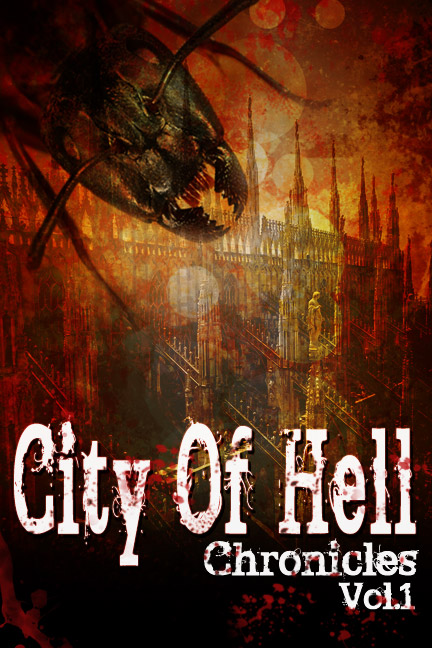
The City of Hell bugs are on the loose!

The day has come: the horror anthology City of Hell has launched, and everyone can finally be scared out of their wits. I’ve never been part of a project getting so many good reviews before, so I’ll just say this – buy it.

Paperback

Kindle

I didn’t feel like posting a Fridayflash this week, instead here are the very first words that will appear in Wild Swan. Not a prologue per se, more like a poetic warning about the book. Ready? Go!

Fire, Let It Burn

Fire, See How It Feels

Forthcoming Fire

You like? Me too. It’s totally copyrighted, so don’t even try.


Interview From Hell, the saga

I am extremely proud to be part of the Anachron Press horror anthology City of Hell – Chronicles 1 coming out this December. Kendall Grey (you know her, right? such a cool/crazy writer to stalk) orchestrated The Interview From Hell – follow the links at the end of this post to find out other hellish memories…

Kid from Hell

Colin Barnes:

The annoying child across the street to me. Their back garden isn’t far from mine and they have one of those annoying trampolines inside a net. He bounces on that damned thing screaming and shouting at all hours. Drives me nuts. I have considered a sniper rifle.

Victoria Griesdoorn:

During birth I broke my collar bone and the doctors never noticed. My mom saw a nurse for a post-natal check up two weeks later and asked whether it was normal that I was a happy baby but started crying as soon as my mom picked me up. The nurse found the broken bone and assured my mom it wasn’t her fault. My mom must have thought I hated her.

Ren Warom:

I have three – I call them the spawn and they are the burning plasma at the heart of my world and the single reason I will go bat-crazy and drooling before I hit my prime 🙂

Kendall Grey:

As a former middle school teacher, I have a long list of kids from hell, but there was only one I grabbed by the shirt collar and nearly punched. Spawned straight from Satan’s wanton loins, this little shit made it his business to keep all the teachers on Prozac. Years later, I was talking to a substitute teacher at school and thought he looked familiar. I asked his name. It was the kid from hell! All grown up now, he’s the nicest dude.

Anne Michaud:

Aren’t they all from Hell? I mean, really: the crying, the nagging, the demands and diapers. I rest my case.

Belinda Frisch:

Any kid that trashes my house, fails to follow rules, cries excessively, or messes with my pets is a kid from hell.

Amy Overley:

The kid from hell was a little boy named Adam Snavely. Yes, Adam, I’m naming names, dude. I was a kid too at the time, and we knew each other from church. CHURCH, people. Where we’re supposed to love each other like Jesus…or something along those lines. Adam, however, loved staplers. He loved stapling me in particular. I would run every Sunday after church to cower behind my mother’s skirt. My mother, of course, took Adam to task, but his mother would say with a cheerful smile, “boys will be boys.” Really, I should have kicked him in the gonads.


Friend from Hell

Colin Barnes:

I once had a friend who did a terrible and highly illegal thing and had to move to Cornwall to escape the wrath of the family of the person on the end of this terrible thing. On the upside, the only way he could afford his rent was to let the landlord do certain ‘things’ to him against his will to make up the shortfall in the rent.

Victoria Griesdoorn:

The only times I ever hated a friend was the dreaded Sunday mornings. Growing up, I used to always be outside, playing or hanging out on the streets. Back then shops were closed on Sundays and my friend’s family slept in. I was bored to tears every time. I still hate Sunday mornings.

Ren Warom:

Huh. Easy. Sharon. Nightmare. Black hole human. Friend at my second senior school. Needless to say I will NEVER be guilt-tripped into being friends with someone ever again. Back-stabbing cow she was. Told everyone I’d gone nuts when I left school due to having enough of being bullied by people who hated HER. Bitch. I’m totally over it… 😛

Kendall Grey:

I have a few, but I won’t name them. To stay off Kendall’s Friend from Hell list, follow these simple rules. 1) Don’t push your kids off on me. I don’t care how sweet they are. I don’t want them around without you there. 2) Don’t use me. Contrary to popular belief, I can be very kind and giving. If you take advantage of me, I will fuck you up. 3) Be there for me like I’m there for you.

Anne Michaud:

Stephanie was her name: she stole my Smurf ballerina, a French dress for my favorite doll, my Halloween candy and tried to make me fall off my bicycle. Needless to say, we stopped being friends after she brought matches to my sixth birthday party.

Belinda Frisch:

Any friend that betrays my trust, covets what’s mine, lies to my face, or uses me for what they can get and then are never there in return is a friend from hell.

Amy Overley:

Her name was Sandy, and she had hair the color of old cherry Koolaid and a carrot-tinted complexion from too much time at the tanning bed. Sandy was the sort who loved you at first sight and regurgitated her entire life story onto you within minutes of clasping you to her hefty bosom. Sandy was fine until she got drunk, and then she was “Handsy Sandsy.” Woe to the man who stumbled across her path at a party. It didn’t matter if you were gay or straight. If you had a package, her hands were on it. Damn, I miss her at parties.

Check out the rest of the City of Hell crew’s Interview From Hell:  

November 14: Colin Barnes – Ride from Hell; Boss/Coworker from Hell

November 15: Victoria Griesdoorn – Pet from Hell; Car from Hell

November 16: Ren Warom – Day from Hell; Illness from Hell

November 17: Kendall Grey – Vacation from Hell; Family Member from Hell

November 18: Anne Michaud – Kid from Hell; Friend from Hell

November 21: Belinda Frisch – Binge from Hell; Book from Hell

November 22: Amy Overley – Meal from Hell; Bug Bite from Hell