Category Archives: Short Fiction

Meet Jory, survivor in the City of Hell

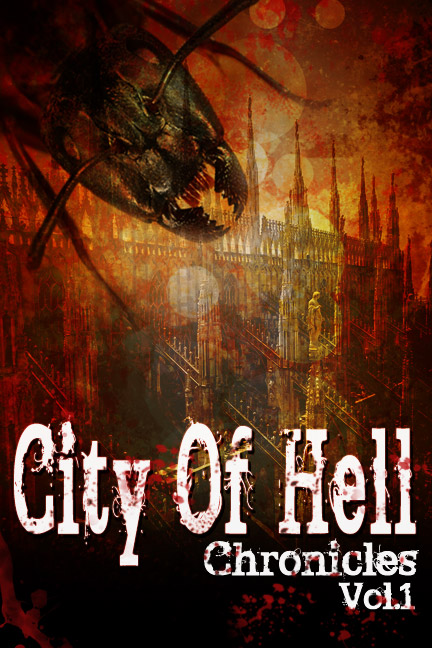
Welcome to the City of Hell…

There is no god, no angels, no redemption. There is no hope, only suffering. The great Ant-headed Old-One has risen and brought hell to earth. The land is scorched and the human race decimated, eaten or tortured. Only three cities remain, a crumbled dying version of their former selves: London, Moscow and Hong Kong. The Old-One’s own City of Hell dominates most of North America. Its diabolical influence has turned ordinary citizens into torturers, debased slaves, lunatics and zealots.

With an eruption at Yellowstone, the likes of which humanity had never seen before, The Old-One tore apart the land, and ascended to rule, aided by its faithful army of acolytes. From the core of the earth it crawled up on to the land, spreading disease and insanity to all corners of the globe. (written by Colin Barnes)

And yet, a 15 year old girl survives…

She lost her mother in a brundlefly attack 8 months ago, after her father never came home from a Hu’ meeting with the neighborhood survivors. Finding refuge with her brother in the London underground, she struggles through the soldier ant attacks, the violence and death surrounding them, without food and little shelter. Every day, the Bébittes take more lives, and when her brother is eaten by a hungry flock of centipedes, there’s nowhere left to run, no place to hide.

Meet Jory, 15 years old with a death wish to burn London in her wake.

The City of Hell Chronicles tell the tales of survival, death and debauchery. Coming out December 2011


Callum77

I dreamt this about a month ago and thought it’d be the perfect #Fridayflash – have a nice weekend, folks:)

Callum77

Why would he visit each factory?

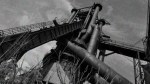
The crowd of workers gathered to listen to his genius mind, to catch a glimpse of his cherished face. Small at first, then the factory parking lot left no space to breathe, so many people by piles of rocks under the long ramp. Rain lashed from the sky, the sheets of metal rusting with an iron smell, dirt puddles now mud. Why would he visit each factory? I wondered, when a hand fell on my shoulder.

“Long time, Marla.” Tobias smiled at me, checking over my shoulder to see if anyone heard. “Never fancied seeing you here.” Behind him, his wife and two children; before me, what my life could have been. I nodded to Carey, she waved back, staying away.

“I’m curious, is all.” My shaky voice shamed me, showed how vulnerable I’d become with the passing of time.

“Aren’t we all? Just to see what he’s become.” Tobias checked Carey, his watch, anywhere but me. “Think Rick will show up?” Like anyone cared if the drop-out found his way back from California.

“Have I ever let you down?” Rick leaned close to me from behind, a breath of menthol cigarettes and Vodka, both prohibited by the new laws controlling us. “I promised a million years ago, so I came.” He showed us the thick padding of the bullet-proof vest under his trenchcoat. “Came prepared if we’re found out, though.”

We. As if I was still part of their group, even after I deserted it to join Callum; as if the past was behind us and didn’t taint the future.

***

Second year of college, a long way to go before our Doctorates in Engineering and Technology diplomas, when Callum admitted after a night of debauchery: “It’s always been you, Marla. Since kindergarten.” Tobias was sleeping in our room, and my feet rested on Callum’s lap. “You need to know the others don’t matter, because they’re not you.”

That switch in my heart, I regretted it the next day, as Tobias yelled: “You fame whore, once he’s fried your brain cells with his experiments, he’ll throw you to the curb like the others!” Which was pretty much what our other friends thought, too.

Not Carey, though. As I trudged my stuff down the driveway, she smiled and said: “Don’t worry, Marl. I’ll make sure he’s okay.” Did she ever. They got married the next year and moved far away from Callum and me, even though by then, I had wanted to vanish from his sight, too.

Callum invented it, the device small enough to be slid up through the nose to render computers a waste and the human body a machine, keeping all communications silent, through our minds only. Saving us so much time, turning us into better citizens who couldn’t hide anything.

After being his guinea pig that one time, I never again approved of having my mind meddled with, didn’t like the intrusion, the hopelessness. Neither did Tobias, Rick or Carey, and once I made my choice clear, Callum left me for good, but by then, the government had already set him on a mission to rectify the working class. Buried under so much money and power, he forgot about us—me most of all, I’m sure.

Not many knew what would happen after the mandatory surgery, the government leaving little choice on the matter. For our own good, to work more efficiently, to be more proactive against daily threats from enemy countries. But their minds were tampered with, their most personal thoughts, their every wish spammed for hours, with a humming that never went away.

I knew and the population didn’t, so I fled from the city, hid in the abandoned suburbs, found ways to pretend I’d had it done when I got caught, by reading people’s faces and watching their body language closely. Because outcasts were also known as fugitives.

***

“Here he is, the man of the decade,” Rick whispered as Callum strutted down the factory ramp twenty feet above the crowd. And this unnerving silence I’d never grown accustomed to, the air febrile with thoughts I refused to adhere to. Partly to blame, I should’ve stopped him all those years ago, while he had still listened to the words coming out of my mouth.

Callum77, the name by which he was known, this computer genius who always used the same code, the same user name, with everything he ever touched. Nothing secret, everything out in the open, except what truly lay in his heart. The world knew and embraced him for it: no feelings just thoughts.

Through his mind, the man I once loved spoke to everyone but me, and one look at Tobias, Carey and Rick assured me: we had to stop him and the government. We had to rebel.


Sister Mine

I often wonder about lights in the sky, if there’s something else than stars, planets and a map of black nothingness. Here’s my #Fridayflash spilling a hair over 1k – enjoy:)

Sister Mine

The first time you came into my room at night, you stood at the foot of my bed, motionless, clutching yourself. “They’re coming for me. You have to help me hide. And lie. But you can’t let them know you’re lying!” Dark night, the blue moon cast a shadow on your features, hiding your eyes. Opened or closed, I never knew.

That following morning, Mom found you crammed between the washer and dryer in the basement. You denied sleepwalking, all those horrid nightmares, your screams waking the whole house at least once a week. But Dad wouldn’t allow this kind of talk, he didn’t believe in psychiatrists either.

You were obviously going through something big – big enough to wake your little brother at night, subconsciously. Then you began to change, your stupid friends wouldn’t come around anymore, you began locking yourself in your room and staying in on the weekends. Mom noticed, but Dad wouldn’t hear about it, thinking it was a phase that would go away. It didn’t, but you did.

***

It took them eight months to find something, and it was nothing. A shoe in the woods at the edge of town, by the foothill where you used to read before supper on long summer evenings.

Dad changed his after work gin and tonic from less tonic to straight up. Mom pretended she didn’t see, but she was the one buying the groceries.

We had to talk about this, if not for you, for those you left behind. “She isn’t coming back, is she?’’ I asked Mom when Dad was out, wrecking the woods to find you. As if you’d materialize safe and sound, and he’d bring you where you belonged. Our Dad, our hero.

“Don’t ever say that.’’ She stopped scrubbing the invisible spots on the kitchen counter and turned to me with dead eyes: someone had taken you and it was too late. “Christopher, go do your homework. I’ll take care of this mess.’’

She’d been cleaning that kitchen for hours, no mess left to scrub.

***

You’d been gone for eleven months, two weeks and five hours. Mom still hoped, Dad still drank, and I thought I’d never see you again. Forgetting was our new family motto, although no one ever spoke it out loud. But not me, I wouldn’t forget you.

‘’To Jenny,’’ I raised my glass of milk for your birthday, and everything went silent for a second. I don’t even know why I said it, I guess I felt you.

The lights flickered, the entire house buzzed for a good three seconds. And this weird noise, like we were about to blow up. Then, a black out.

Mom and Dad checked the fuse box, but I stayed at the kitchen table, finishing my macaroni and cheese. I guess it’d be hard for Mom to stop cooking what you asked for year after year.

Our parents ran around the house as if we lived in nuclear times, under attack from invisible forces. Maybe they felt you, too, and wanted to get away as fast as possible—because if we felt you in the room but you really weren’t there, it meant we’d lost you forever.

***

That night, I heard something strange. I went to the window, and in the sky, a star shined brighter than the others. It turned a paler shade of blue, pink, and yellow. The colors of a rainbow, on your birthday, from you to me.

“Jenny…” I prayed and wished you’d hear me.

The star turned into a million of them, a piece of the sky detached itself from the endless map, and a pyramid of lights danced. The sky fell that night, beautiful and frightening.

I never mentioned it, but every other night, one of the stars glittered more than the others. Sometimes, when I got lucky, it turned pink. Your favorite color.

***

The policemen came once, shoulders low and faces grave. They had bad news, they didn’t have time to step inside, refused coffee and cake. Mom and Dad stood side by side, waiting. Did they find your body? Had you gone from missing to dead?

The case was to remain open for five years, but the searches were non-conclusive. They offered counseling schedules and a package. Great, they’d brought a present. More like a bomb, in our house.

They left one minute after that. Dad stayed downstairs and Mom went to their bedroom’s en-suite. She got into the shower, her sobs louder than the water. I stayed in my room, waiting for someone to tell me it was a joke, that you were okay, just a runaway in a cool city, waiting for me to join you.

***

Two years, three months, eleven hours, that’s how long it took you to get me. I’d changed schools and had a piercing, but none of it mattered that much.

“Christopher.” Clear with every syllable, waking me in the middle of the night, like you used to. “Christopher.” Every hair on my body stood on end. “Look into the sky.” Your voice, Jenny.

The summer wind gusted and lashed the trees lining the street. I opened the window, letting in the hot air, my curtains shifting, their shadows eating my walls. The A/C went out with the power in our house.

I shook from head to toe, but couldn’t look away, couldn’t ask the voice to stop. I felt you; I sensed you close to me. And you repeated for me to: “Look into the sky, Christopher.”

The stars moved, changed, soft blue, pink, yellow, twisting and turning, making me lose all perspective. Massive as it came down, and silent, like a summer storm: a spaceship.

‘’I’m scared.’’ Barely a whisper, but you heard me. You always did.

‘’Don’t be. We’ll be together.’’ And then, as if I doubted the voice wasn’t yours, ‘’Journeys may end and nights might fall, but Brother, you will always be loved.’’

‘’And through the hardship of rain and the sorrow of dreams, you will always remain Sister mine.’’ I’ve remembered these words ever since you first read them to me at bedtime, back when I was a kid and you were my world.

Home in the stars

I’d never be alone again, Jenny, because I joined you. The stars became my home, and I turned them blue just for you.


Bleeding Dry

After a very short break from my #Fridayflash, here’s a story I wrote right after the oil rig disaster that struck America last year. 

Bleeding Dry

An island of metal and steel, cold and lifeless – felt like his, anyway. Nothing but the ocean, deep and frightening, sharp around the edges, burned up by the rising sun. Roger took a picture; Jenny would love this, his last sunrise. Heck, maybe she’d even find it romantic.

After thirty-five years with the same company, they called it anticipated retirement. He still had a couple good years left in him, but Roger wouldn’t fight a lost battle. When he compared himself to others, he had it good; they let him off easy.

‘‘What do you want me to do, Rog?’’ his boss had said, in that high-pitched voice that always sounded like nagging. ‘‘My hands are tied. They gave me no choice, them up there. They said: it’s either the rednecks’ supervisor or some kid who can do the job just as well. What do you want me to do?’’ The final blow, the one that made Roger regret the whiskey he’d given him for Christmas. ‘‘You’ve had it good, it’s time to give up your spot to someone younger. It’s only fair.’’

Could be his age, could be the fact that his bags were packed – whether he wanted to or not – but he felt a shift in the air. Palpable, something gone wrong. He would leave it at that, not really knowing what caused the feeling. After what happened on Monday, then again on Friday… Mentioning it to his boss didn’t get him anywhere but ‘‘forget it, not your problem, not your fault.’’

It wouldn’t go away, he couldn’t forget. People talked, questioned his work ethic. When he walked into a room, they stared at him. And that silence… so heavy with unspoken words. They thought he let it happen, he supervised the horror, revenge for getting laid off. The rumors quieted down, but not everyone believed in his innocence.

His last week had been bloody: two deaths in five days. One man had drowned – shark shit by now – and the other had been ripped to shreds by a pipe drop, right in front of him. Roger had never seen something like that, not in his lifetime. He struggled not to play it over and over again in his mind; bones ground to dust, flesh to a pulp. Joe Johnson or something of the like, he couldn’t remember the new kid’s last name, but his cries wouldn’t leave his head.

Roger had thought about pleading with his boss for two years at eighty percent, just so he could stay on the job. Two men were gone; he could stay for the company now. Too late, though. The papers ending his contract were signed, the chopper scheduled in the morning to pick him up. ‘‘A waste of breath,’’ Jenny would say.

Photograph stolen from The Telegraph

A man's island

Five more minutes, he’d be late in two, but he didn’t care: this he considered his farewell party, alone with the sea, the grinding rig almost silenced by the strong Nordic wind and the hypnotic waves. Anyway, he didn’t feel like cake and coffee, he wanted to breathe in the salty air, take it with him, back on land, back home. But who was he kidding? This always been his home.

He avoided looking at the huge platform beneath his boots, the long neck moving up and down, the pumping sound, grabbing something underneath, something that wasn’t theirs to take. He had never liked how the drill violated everything, how it raped life. The smell clung to his clothes, and his heart pounded at the thought of being stranded with nowhere to go. He never thought he’d last so long on the rig, but he had.

‘‘Roger.’’ A static cry broke the moment, his CB hanging low by his thigh. ‘‘We got a problem.’’ They always had a problem until he showed up and made it all better. What would they do without him?

He stole one last look at the ocean, the one thing he’d remember most, as the sky turned from blue to bright, from dawn to yellow, pink and mauve. On the horizon, dark clouds ate the colors, turning them grey. He snapped another picture, for Jenny, who had never left Nebraska. With a deep breath disguised as a sigh, he vanished inside the rig, the door clanging shut behind him.

A group of men rushed out, their bright yellow overalls covered in thick red goo. It smelled like iron, reminding Roger of Joe. Another accident? Who died, now?

‘‘What the…’’ Roger didn’t finish his train of thought. He didn’t have to since most of the men and a few women stood before him, blocking the way. Heads bowed, eyes on the pump as it slowed, solemn as they stared.

At first, Roger recognized a joke, a gesture for his departure, but no one laughed. Not in the least. The pump should never stop, time meant money and each wink of this bad boy brought thousands for the company. Something major, something big must have happened.

He pushed the rednecks away to get to the heart of the problem, his boss squatting on the greasy floor, not one inch of his overalls spared from the crimson fluid. Roger opened his mouth to say something, but words failed him – but his eyes, he couldn’t take them off what he saw, couldn’t look away. They all continued to stare, everyone, refusing to believe, to say it out loud.

No petrol being pumped up, no black gold. Impossible, surreal, worse than anything they’d ever seen. Right there, before them: blood.

From its core, the planet bled.


Forlorn

I have decided to participate to this week’s Flash Fiction Friday, because the picture was so evocative, heartbreaking and real, this story burst into my mind.

FORLORN

The plane’s cargo hold filled with screams and cries. Soldiers piled more people inside, the air stale with fear. They held machine guns and wore masks, their shiny boots crushing fingers, hands and feet. They pushed and shoved, gave bruises and wounds.

‘‘Daddy, he’s coming now.’’ The girl’s voice broke, tears falling down her face reddened by the wasted run—no one could escape the Army. ‘‘I need to push,’’ she said, eyes closed and chin tucked in as she cried in the surrounding madness.

The old man held her hand, shocked by their brutal arrest, by what was to come.

‘‘Daddy, help me!’’ she cried out, the people around them making way for her spread legs, blood and other fluids leaking out of her. The smell of booze and unwashed bodies was so pungent the old man covered his nose with his spit rag. ‘‘Promise me you’ll hide him well.’’ With her painful words, his trance broke.

The old man stood up, even if he’d been told to stay down and shut it. He grabbed a soldier’s arm and pulled. ‘‘Darla is having her baby.’’ Never good with words, he feared his voice got lost in the roaring of the engine and the gusts of wind coming from the closing cargo hold. ‘‘Got a doctor?’’ Like the Army would keep one to check on the hobos they forced to fight on the war fronts.

When the soldier brushed him off, the old man lost it. He screamed, ‘‘You have no right to keep us here! We are New American citizens!’’

‘‘What the hell is holding up my plane?’’ A general advanced from the cockpit. ‘‘You the trouble maker?’’ An oxygen mask covered his face, the stink too much for his rank.

The old man noticed his daughter unconscious on the floor. He sank next to her, gently tapping her cheeks to wake her up. Tears fell from his face and joined hers.

‘‘Get them out, the both of them. Waste of space, she’s dead and he can’t walk straight,’’ the general ordered, and soldiers grabbed the girl roughly, her head dropping to her chest.

‘‘Darla!’’ the old man shouted, but she didn’t open her eyes. ‘‘Darla, wake up!’’ But fright seized his throat and squeezed it shut, letting nothing more out. The old man wanted to scream, to run, to keep her safe, but he was too late.

The soldiers pushed them out of the cargo hold, and the old man landed hard on the makeshift runway in the field. After the soldiers threw her out, the girl’s eyes remained closed, her fists clutched to her belly, nothing moving inside. The old man rocked her just like he had when he’d found her as a baby, left in the trash to die. Back then, he’d promised himself to never let her die.

‘‘Don’t leave me alone,’’ he repeated until it became a lament in the middle of the cornfield, miles from the Macro-City.

The plane lifted off with sounds of chaos, the old man hoping it would wake the dead. ‘‘Darla?’’ No use, she was gone, with the baby still inside her.

*

The old man ran, the pain from his knees shooting up and down his weak legs. He thought someone was following him, but it was his own rattled breath bursting out of his mouth.

Tears didn’t come up, even after he left Darla’s body in the field, no time for a grave since soldiers, planes and spotlights infested the place.

He kept to the ditches, deep enough for cover when Army trucks lifted dust from the roads. He prayed for the night to engulf him, so easy to disappear in a Macro-City of millions but so hard when surrounded by nothing.

‘‘Smells like trouble,’’ he’d said to Darla when she found out about the baby inside her. She would love him just like the old man had loved her; he’d saved her from a life of nothingness. So he’d helped her any way he could: found better food for her, even got a teddy bear for the baby and stashed every penny he found—where was the money? He’d need it to get away, to survive.

*

The dump crawled with soldiers searching for unwilling recruits, their weapon muzzles aimed at the darkest corners. Media Screens blared news about the courageous souls heading to the fronts, forgetting to mention how these were homeless people kidnapped to go.

The old man kept to the side alleys, away from the boulevards. He passed by Sally’s corner and noticed her gone—impossible, she peed where she slept to keep her good begging spot. He checked Ricky D’s palace by the dumpster but no more couch, no more broken TV set. The Army got everyone he knew.

The park square he’d called home for the past twenty years had been raided and destroyed: boxes flattened to the ground and litter rolling in the stuffy breeze. He saw it, his dejected box, by the manhole in the ground. If only he could reach it…

‘‘Hey you, stop right there!’’ one of the soldiers called to the old man.

This was his territory, his Macro-City: he knew every way out. Screw the money, he’d been surviving without it long enough.

‘‘Stop or I’ll shoot!’’ the soldier shouted, but the old man had already scampered into the side alley leading to the underground station.

He slid into the subway station and crushed his body to the Ads Screens under the stairs. The train slowed to a stop and he sat down by the door, waiting for soldiers to come and take him away. But the doors closed, he was safe for now.

Picture taken on the New York subway by Thomas Pluck

His beloved Darla was gone. Back to being alone. Sooner or later, the soldiers would catch him. War raged inside him, he saw the enemy everywhere he looked. If only he could disappear and forget the daughter he called home.


Kelly Green

I found an old photograph at this quaint little antique shop I often visit. Obviously, it inspired me something best served creepy…meet Kelly Green, my latest #fridayflash.

Kelly Green

Foam bubbled through her red strands, hair tangled with seaweed and sand clusters. The shredded remains of her dress rolled with the crashing waves. Caught in a fishing net, she faced the abyss of the sea, flesh bloated and skin a pale shade of green.

Coastal town fishermen finding the body of Miss Green. ''That's our Kelly.''

‘‘She the girl?’’ asked the fisherman holding his net full of fish and a dead body. ‘‘She the one?’’

‘‘Who’d you want her to be? Sure it’s her.’’ Their voices lost in the seagulls above and the deadly waters below. Her corpse danced as the net neared the shore.

Another fisherman waited, boots deep in the tide. ‘‘Yep, it’s her all right. That’s our Kelly.’’ Guilt rose in the seamen’s chests, remembering her atop the white cliffs. Not the first or the last they hadn’t stopped from jumping.

*

‘‘Think it’s pretty, Mamma?’’ Kelly twirled in her dress made specially for the occasion. A sharp shade of green, her favorite. ‘‘Think I’ll be the prettiest?’’ She tilted her head at the mirror, scrutinizing the details by the hem: sparkling gems with embroidery. She recognized her mother’s craft, the only soul in the village with enough patience and skill.

‘‘Don’t you let it go to your head, girl. Don’t want town folks to think you’re vain.’’ Mamma straightened Kelly before kneeling to mend the bad pleat hidden by the sash.

The Fishwives sat by the fire, carefully watching Kelly’s every move, listening to every word. ‘‘I wonder, Mamma…’’ Barely fourteen and dreaming of Jacob on his boat, sweat mixed with seawater. ‘‘I wonder if anyone will want to dance with me but miss their chance. Too shy or afraid to ask me or something.’’ Jacob’s smile at last year’s harvest ball brought hers back. Strong, he’d make a fine husband.

‘‘You can’t go on living with ifs and maybes, Kelly.’’ Mamma’s head bowed to the needle and thread jabbing the fabric, and Kelly noticed the gray mixed with red. Her mother’s hair used to be like hers, before Kelly got picked.

*

The ballots rustled in the wind, the Masson jar half-filled with names. The First Fishwife cleared her throat and read the chosen piece of paper.

‘‘Kelly,’’ she read as the village of four hundred gasped. ‘‘Kelly Green.’’

Kelly approached the altar with her head held high, knowing once She chose you, you obeyed. Mamma cried a little, probably because her days would be lonesome with Dad and Timmy out fishing.

‘‘A proud, proud day to secure the fate of so many,’’ the First Fishwife proclaimed as she regained control of the small crowd. ‘‘God will be happy for such a gift and will give us plenty for the year to come.’’

Kelly’s future lay with the sea, her soul to melt with the waves and her voice to crash on the shore, shouting her name so no one would forget her sacrifice.


Xeric

I am no poet and yet, here’s one highly influenced by this oil painting by Ruppert Lindemann. Happy #FridayFlash everyone!

                                  Xeric

He stands by the road, hands pleading to the sun

He prays for the rain to come and drown him

Kills his sorrow, chokes his heart, dissolves his soul.


The cracked ground will engulf him, he waits.

The vultures will pick at his face and beak out his eyes, he prays.

copyright Ruppert Lindemann

The sun will burn him to oblivion, he cries.


The day slips away and leaves him stranded

With nothing: no blade, no gun, no poison

And this thirst to die that never ends.


Seldom

I don’t know why, never really stopped to think about it since I guess the outcome would depress me, but I feel this rush when I see my name in print at the back of an anthology or in a magazine editorial. Pretty much like at the end of my films, where I signed this short moment in time as my own. My words, my worlds.

I first thought of Misery of Me about a year and a half ago. I was reading another vampire book (a little obsession of mine called Let the Right One In by stellar author John Ajvide Lindqvist) when I got this idea for a heroine addict vampire falling for her suicidal blood bank. Catchy, right?

I checked out Duotrope (because who doesn’t, really?) and noticed Cutting Block Press actually wanted horror novelettes – a rare thing – they paid a fair rate, but asked specifically for no vampires… unless something different was explored. Well, I started to write down this story of need and want, of sadness and despair. Added a few dark twists and gloomy turns and sent it to my beta-friend.

Her favorite, by far. Strange, since we’d all ODed on fangs by this point. So after a few tweaks, off to them Texans. Couple months later, I received this email full of praise from the editor himself. Not only did I fall in love with this stranger who liked Misery, but little did I know he would provide me with the best editing experience I’ve ever had. Kind and sometimes heartless, encouraging and sweet and motivating—love at first word.

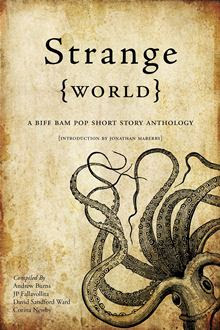
Does it get better? It does. I get to hold this anthology of amazing stories by creative writers, and my name is printed on its back. It travelled from my mind unto here, something tangible I can touch. I’m so proud of the anthology, so happy to be a part of it. This is how I get paid to write everyday, this feeling right here.