Author Archives: Anne Michaud

About Anne Michaud

Unknown's avatar
Author of Dark Tendency

Drum-roll, please…

I fell in love with writing in my tiny flat in Zone 2, London. It was a freezing cold night, a draft came from the single-glazed bay window of that old Edwardian front room I called my home, my fingers danced on the keyboard as words flew out, when I realized: I wouldn’t be doing anything else, right now.

Then came the Master’s in screenwriting diploma a year later. When people asked if anything happened with the scripts I’d been writing,  I replied of course not, I knew no one in Montreal, had been gone too long, lost touch, etc. So, during the two next years, I made my own short films: produced, directed, wrote – and hated it. They never were as good as what I had written, even if they were distributed and sold to TV.

Novels, I told myself. I’ll write novels, get them published, and be happy – but agents got in the way. Five years, seven projects, and about 500 rejection letters later, I still haven’t found one. Oh, I’ve gotten advice and cheers and encouragement, some said my writing was beautiful, I knew how to build up a scene, they admired me and loved my work…but no one wanted to represent me.

What is a girl to do? How do I get published without waiting another year or two to get an agent, then the rewrites, then the submission to publishing houses? Well, I sent my query to the best small publishers my research provided…

AND GIRLS & MONSTERS IS GETTING PUBLISHED BY DARKFUSE IN 2013!!!

Cheers to you all, I’m having a drink right this moment 🙂 I never thought *this* could happen that fast.

Oh, what is Girls & Monsters, you ask? It’s a collection of 5 novelettes about, well, girls and monsters. It’s dark, gloomy, aimed at the young-adult/new-adult gap, it’s scary and funny and I’m in love with each of my characters and their monsters – because don’t be fooled, we all have one waiting in the dark…

Happy Goth dance♥


Body for Body

Well. It took me 8 months to finish the dystopianly dark I WAS HERE trilogy – do NOT judge, things got in the way, like they tend to do when you least expect them to. So here’s the third and final installment, after Bullet for Bullet and Blood for Blood. Enjoy, Friday flashers 😉

Body for Body

Water dripped on metal, rusting the air. Before my eyes, steel twisted intricate patterns to form my cage. Four walls, a hole in the ground. The old warehouse housing men, killers and fathers, and me.

The night started with drunken victory chants from the Amazons on their way back from another attack. The rhythmic rhymes could be heard for miles, with the thick fog hanging low and the imminent splashes of rain overhead. They didn’t care – they’d won, always did.

“Soldier or breeder?” I asked no one in particular, scared of who they brought back. I wondered if it’d be a girl, rebelling against their ways like me, choosing this instead of killing or reproducing. “Soldier or breeder?” I asked again, wanting to know if I’d make a friend or foe.

The man in the next storage unit spat on the ground, mumbling, “Shouldn’t have kept you alive for nothing.” He’s right.

“Survivors, warriors, it’s the same to us,” said the woman in charge of everything. She spoke to a stranger, like she had to me on my first night with the Amazons. “Which path will you take, is what we need to know.”

I thought of Roman, Henryk, the other men – all this time I believed them rapists, but the girls I traveled with had planned their pregnancies from the beginning.

“Here’s our group of male breeders, but we always need more. More women to fight, more men to fuck.” Her voice rang high as she threw me a smile, knocking on my cage door for hello. It rattled, like my bones.

“No more war, no more blood. Enough,” I said.

“Body for body, each life they took we give back.” Automatic, the response she gave to every question about her method. “And we will win the war, with love and compassion, trust and freedom. We’ll change the world, you’ll see.”

The girl next to her had to decide between a crumbling building where the pregnant women waited to deliver in peace and the warehouse where soldiers in training guarded the prisoners they kept.

“I want to fight, I want to make them pay.” The girl chose her fate.

Nothing like mine, where they threw me in a cage, to control me, to make me change my mind, to make me come to them. Once again, they won.

I woke up from tension sifting the air out of the basement. The wave of it woke me up before dawn, when stars diluted the sky. Rushed voices, cracks of rocks under thick soles, then a light sparkled in the dark. The smell of burning leaves mixed with rusty metal.

“Let me out,” I begged. “Set me free,” I cried. I drank my tears, salt better than the sandpaper coating my mouth. “Don’t forget me.” But the Amazons already had, weeks ago, when I said ‘no.’

A ball of fire exploded at the back of the storage units and spread its wings with red and orange flames. Smoke thickened and scratched at my eyes, the welcoming draft bringing danger closer to me. Men screamed in pain as they cooked alive, rattling their cages as they tried to escape the inevitable fire.

I waited for the chaos to pass, crawled in a hole in the dirt. Warmth boiled my back, the walls of my cage fell and protected the little that was left of me. Then, nothing but silence.

My memories of tripping over fried bodies littering the floor were more vivid than anything else. Gunshots and smoke surrounded each step between the dilapidated buildings; screams and shouts of vengeance echoed on the walls around me. But I ran, away from them.

Through the rain, under the sun, splashing through the creek and dusting the road. A quiet place to end my days, to stop my heart from beating. Because to live meant to kill, to take life away; whether by gun or giving life. Not me, never. Like an animal, I’ll die alone.


Day of Demons Giveaway Extraordinaire ♥

Colin F Barnes edited the ecclectic Day of Demons anthology with amazing authors, so I decided to pick their brains out with a few questions…

I’m always curious as to how other writers find inspiration, especially when submitting to an anthology which connects its stories with one common subject, in this case demons. How do you approach such a task? Do you have stories stored-up? Do you write on demand?

GARY BONN: All of the above. I think most writer’s heads are like overstuffed attics. If you have a stimulus like a theme, you can dig around dusty old boxes in you head and find something shining. Often, a stimulus gives you the very thing you need to bring a story to life.

 KT DAVIES: Hey Anne and everyone:) I’m used to working to a brief having done so writing for various live-roleplaying game systems. I also like having a prompt, (possibly because I’m lazy;p). I have got some short stories that I’ve written on a whim and that I’d like to find homes for, but it’s tricky finding the time to work on them whilst keeping up with more pressing projects.

SARAH ANNE LANGTON: Panicky words on demand! I actually think of a title first. Yup, possibly wierd. I know. Then chaotically wander the internet to start filling in the characters and hunting for demonic little ideas I might like use. DOD was wonderful to write as it was a great excuse to go poking about online into all sorts of dubious occulty places. Good call Mr Barnes : )

VICTORIA GRIESDOORN: That’s an interesting approach, Sarah! I would have never thought to go on the internet to come up with story ideas. I’m usually very thin on the ground with story ideas. So I usually only submit to anthologies if I already have a story idea that fits the theme. They’re few and far between for me. I am even worse at developing an idea past the premise-stage into full story-stage. With me it usually comes down to blank screens, frustration and deadlines.

KRISTA WALSH: I think my approach is closer to Victoria’s with the frustrating and looming deadlines…and I also tend to go for anthologies where I’ve had an idea sitting around for awhile but not known what to do with it. DoD was perfect because the premise had been simmering for months. I’m slowly developing the ability to write on a whim. I’ve participated in a number of flash fiction contests the last couple of months where it’s just a matter of closing your eyes and diving in. How successful I’ve been? Guess I’ll leave that up to the readers.

EDWARD DRAKE: I write quite a few short stories and have loads of unfinished ideas, some seeing the light of day on my website while others stay locked away until needed. It was just really lucky and really good timing that I spotted the request for Day of Demons submissions when I did. I had just started drafting Cost of Glory when I saw the shout out, so I already had the idea…kind of. It needed tweaking, mainly the demon aspect, but I was just lucky that I already write a lot of fantasy and I spotted the posting for submissions when I did. The ideas themselves come from anything, a daydream, a line of dialogue or even requests from family and friends that I have run with and expanded upon. Some lead to nothing but luckily others can lead to something more, like a part of the Day of Demons anthology.

LAURA DIAMOND: Hi all! I’m pretty new to the short story scene. I keep my ears open for anthology topics or genres that I enjoy, then I brainstorm a story for that anthology.

Great to see diverse approaches to writing for an antho:) Now, let’s get down and dirty. I’ve heard many times – and have been asked twice – about women and horror: some say the two don’t match, something to which I strongly disagree. What’s your take on it? Can women scare people shitless as much as men? Should women stick to ‘softer’ genres, such as romance and erotica? Yeah, I just vomited inside my mouth asking that last one.

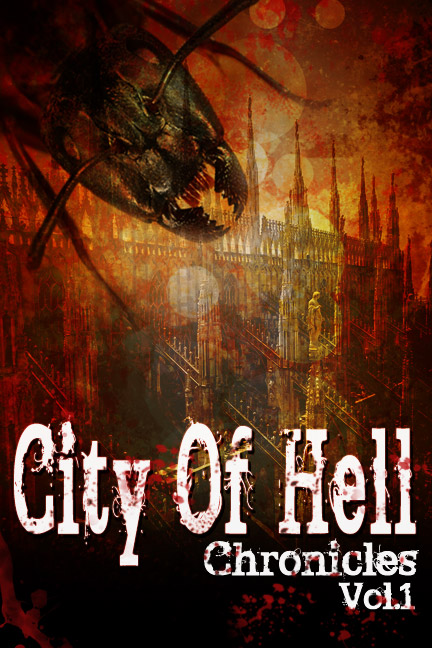
KRISTA WALSH: I think Colin’s already proven that theory wrong with his City of Hell collection. That one kept me up for days! So resounding answer: no! Women may have a different spin on horror but it’s no less effective or skillful. I can’t take credit for itmyself, though. Not so much a one for the creepy.

GARY BONN: I just wish Ren Warom was here to answer you. Her debut novel is with an agent now and will scare people totally… er how do I say this? You know the way people talk about watching scary films whilst hiding behind the sofa? That’s how people will read it – and it’s not even intended to be horror. If she were to write in that genre… Excuse me, I’m off to hide behind a sofa.

EDWARD DRAKE: Trust me, women can scare just as well as men. There really is no gender divide when it comes to genre. Be it horror, war, sport, anything, women can write just as well as, if not better than men.

COLIN F. BARNES: I see no distinction in genders, personally. Women can write equally as horrific stories as men. (Women In Black, and Frankenstein immediately come to mind). I’m not sure why there aren’t more in the mainstream, but I blame traditional publishing for that. Them and their pre-conceived marketing ideas. If more women were given chance to show their horror work, I think the genre would be in much better shape than it is now. Probably less derivative zombie stuff.

VICTORIA GRIESDOORN: I agree with Edward. I think there’s no such thing as gender divide in genre. I think it’s much more determined by personality than gender. But I do think there might be a societal bias. Women in our society are commonly taught to think of themselves as the gentler sex and I think that sometimes shows in genre choices (as readers and writers), not capabilities.

SARAH ANNE LANGTON: Really? People still question this? Erm…. totally amazed folk would even think that chicks writing horror was an issue in genre fiction these days. I can tie my own shoelaces too.

What Mr Drake said 🙂

JAMES MAZZARO: I think different things scare women as opposed to men. Take for example Anne Rice. While her vampires are deadly, they use the art of seduction far more than what we saw from Stephen King’s Mr Barlow in Salem’s Lot. Men concentrate on blood and gore and delivering that shock scene in vivid detail. What I see from women is deeper levels of suspense and far more intricate motives for their heroes and villains.

Both methods are extremely effective. The goal is to keep the reader turning the pages far past their bedtime.

KAREN REAY-DAVIES: Mary Shelley wrote Frankenstein in 1818, I count that as horror, indeed, it’s probably the first horror story. as Camilla didn’t come until, what? 1870 something. Interesting to note, the monster made of body parts that embarks on a terrible path of revenge was written by a woman and the two next nearest horror stories about sexeh vamps were written by men : le Fanu and Stoker respectively. Maybe it’s the men folk who lean to the softer types of horror, but are too shy to ‘come out’?;p But to answer the question. Yes, I think women are equally as capable of writing any genre as male writers.

SARAH ANNE LANGTON: Yes, Mary Shelley never dabbled in gore & Bram Stoker never touched on the sexual natures of vampires. Really don’t think an author’s approach is defined by virtue of their sex.

I never thought it was an issue until critics and interviewers asked me about it – and that was last year, not in 1954. Depressing. But speaking of writers block (literally), when writing, so you auto-censor yourselves? Have you ever changed entire scenes after realizing you couldn’t let it in? If so, what was the scene and what was the genre?

KRISTA WALSH: Can’t say I have. I’ve come close in the most recent project I’m working on. It’s just a short paragraph that’s sure to upset some people, but I’m standing by it.

JAMES MAZZARO: I have one of those fertile minds where stories are playing all the time in my head. The best way for the story to come out is to put myself in a locked room and write. I wrote a mothers love in the middle of the night in about an hour. The words flew onto the page faster than I could grasp what I was writing. I enjoyed writing it so much I couldn’t wait to see how it was going to turn out. When I sent it to Colin, he asked me to expand on the conflict between mrs Gray and the demon. It just clicked.

Since I signed on Twitter, I’ve noticed how many horror writers are out there, promoting or just trying to get published – if not already – and yet publishers and critiques always say the genre is in decline in popularity. I personally don’t believe it, but do you?

COLIN F BARNES: Yes, I do believe it is in decline. You can see it in bookshops; the shelf space is given over to Paranormal Romance and Urban Fantasy. What little shelf space that there is for Horror, it’s mostly stalwarts like King, Lovecraft, Barker et al. Supermarkets, which are selling more books than bookshops these days, rarely have any horror on their shelves of thrillers, romance, and women’s fiction.

If you look at online marketplaces for horror, there’s really nothing of note, hardly any pro markets or zines, just a few smaller token or non-paying ones. Then when we look at Amazon, horror is mostly made up of badly produced derivative zombie, werewolf, vampire fiction and old classic collections. There’s very few top-end horror novels in the marketplace compared to other genres.

But, genres are cyclical. In 5 or 10 years we might see Scifi and Fantasy recede, and PR/UF go the way of the dodo, and Horror return to its former 80s/90s heyday.

This is one of the reasons why I didn’t focus on horror for Day of Demons, instead the focus was on fantasy and dark fantasy with a few horror stories mixed in to give it a wider appeal.

VICTORIA GRIESDOORN: Well, I think when publishers and critics talk about a genre being in decline, they mean that there are fewer books of that genre published through traditional houses, fewer bought by readers via traditional houses and it’s rare they’re on traditional bestseller’s lists. Publishers and critics still don’t pay much attention to how many indie authors there are writing in a genre and how much they’re selling, unless there’s an indie breakout bestselling success, in which case publishers will flock. But I can’t remember a case like that in the horror genre.

KRISTA WALSH: Since I’m not really a horror writer, I can only answer this question as a Twitter observer. Seems to me like it’s still one of the most popular genres among writers and readers. Sometimes hiding under different genre labels, perhaps, but still with a strong presence.

It’s a Day of Demons giveaway madness!!!

The generous editor will ship a softcover copy of the Days of Demon anthology to one lucky (and international) winner as well as choose three others to win ecopies – but you must leave a comment on here and tweet about it (as proof, the link, please) and sign up to Anachron Press to be eligible. Colin will whisper the winners on Friday the 14th of September at midnight.

Good luck:)


And we have winners!

My good friend Adam Sydney chose the two winners for his amazing books (the copies are only 2,99$ – get them!): Marianne Su wins Yolanda Polanski and Jason Derrick wins My Heart is a Drummer. Congrats to both, you’ll enjoy these stories so much:)

I’m going back to my writing dungeon…


My Heart is a Drummer

My good friend Adam Sydney is officially a published writer, and with his second book, My Heart is a Drummer, he explores ♥love♥ the only way he can: weirdly. Adam will choose two lucky ecopy winners, one for My heart… and another for Yolanda. Good luck:)
The structure of My Heart is a Drummer is nothing like I’ve ever seen before – what inspired you to write this particular story this way?

Read it, it’s excellent.

AS: I wrote the first draft chronologically, but as this was the first draft of the first real novel I’d ever written, I wanted it to feel fresh and spontaneous. Consequently, I wasn’t writing off of an outline, which for me, I’ve learned, leads to very leaden, predictable writing. So everyday, I wrote for an hour or two, just plowing ahead on the timeline.

Sometimes, though, I’d run into spots where I didn’t know what was going to happen next. For some unknown reason, I came up with this idea that at these points, I would write little scenes that had nothing to do with the story but would keep me writing and hopefully open my stuffed up brain passages. This actually worked for me.

For the next draft, I decided to take the week that I’d covered chronologically and regroup the scenes into chronological order for each character. So we cover the week with Lourdes’ POV, then we cover the same week again with Eric. For me, this kept the story from revealing too much information too soon, and it also kept the story more firmly focused on the people around Donald and how he affected them, rather than on him.

I don’t know why, but I left in the weird little scenes that I’d written basically as exercises– and lo and behold, people weren’t incredibly annoyed by them! I was surprised, but glad, because they ended up feeling to me as if they were sketches of some of the people who might have benefited from knowing Donald if they’d just lived in his part of the world and/or in his time. But maybe I’m justifying?

You’ve lived in London, LA, New York, but you always write stories taking place in rural nowhere kinda towns…why, Adam Sydney, why?

AS: Wow! No one’s ever asked me that one, before, either! I can see how someone could really get properly cross-examined by a friend who knows them well. I’ll have to behave myself, or you’ll ask me a question that might really expose the darkest recesses of my psyche…

But it’s true, I’ve lived in a lot of big cities– and some smaller ones, too. The setting of My Heart is a Drummer is more suburban than anything else, I think. Montclair, New Jersey is in the metro area of New York City. But I grew up in small towns– maybe that’s it? Although I’ve never consciously avoided writing stories set in large cities, now that I think of it, I get nervous at the prospect. Lots of people will know the place well, and if I don’t represent the city in the way that they’ve experienced it, maybe I’m worried that they’ll not feel the story is as authentic as it could be.

This might also explain why I set my stories in places that I’ve never been to, before. I’m not personally a big fan of fiction that seeks to capture a place; I’m a story man. It’s the background in screenwriting, I guess. So I get a little bored when a novel spends ten pages describing a room or a street. I don’t think there’s anything wrong with that, necessarily. I just prefer to get down to the nitty-gritty of character and action.

Do you believe writers pour pieces of themselves in each work, and if so, what’s your piece in My Heart is a Drummer?

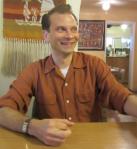
Adam Sydney, author

AS: I think that each and every novel is probably a piece of its writer. After all, we spend so much time with it, and the process can be very intimate. But my problem answering this question is that I tried to ensure writing My Heart is a Drummer would depend almost solely on subconscious creative decisions. So it must all be pieces of me; I just can’t tell you which pieces! People who know me well could probably answer that question better than I could. What do you think? What pieces of me are in there? I have to admit that I’m terrified of your response.

That being said, there were a couple of brief stories recounted in the book that I consciously put in there. They were based on reality, and reading over the book later makes me think that the personal reasons I included them make them weaker than other elements, perhaps. However, no one ever said that they stuck out or felt awkward or self-indulgent, so I’ve left them in.

If any of your readers take a look at My Heart is a Drummer, I’d love to hear what they think might be these factual stories!

So what’s next for you? Are you working on a new story?

AS: I think what’s now and next for me is going to be a lot of marketing for my books. People warned me that getting them published would be next to impossible, but marketing would be a thousand times tougher. So far, that’s turning out to be true. But I was a creative director at an advertising agency for a while, and my boss used to draft me to handle P.R. sometimes, so I kind of understand a few of the basics. I did threaten to quit the job if he me do any more publicity, though, to give you an idea of how I feel about it.

And I’m also working on my third novel, which defies categorization. It’s sort of an experimental, semi-narrative horror treatise on existence. Yeah, I’ll be raking in the dough on that one. I really enjoyed writing experimental screenplays because I’d rather try out a few things that I haven’t seen before onscreen and felt that if I did what everyone else was doing, someone’s probably already done it better, anyway. To give you a good idea of how twisted I am, one of my favorite authors is Faulkner. Of course, with the film industry, the chance that an experimental feature will be financed is pretty slim (I’d put a understatement emoticon here if they had one), so I’ve turned my attention to books. My first two are pretty conventional, but I started to get the urge to try some new things, hence Something’s Wrong. So far, I could only get three of my writing friends to take a look: two said it was profound, and one couldn’t make it through the first third of the book. So yeah, it’s going to be one of those projects. But I still plan on publishing it– mostly just because I can.

So if anyone out there enjoys experimental, semi-narrative horror treatise on existence, please do get in touch!

**Leave your comments, guys – you could win an ecopy of the book on Monday July 30th:)**


Michael Martineck’s AWESOME Stray Score

Writer friend Michael Martineck has been working on an awesome website and who to explain it best than himself?

As a species we’ve been ranking books since there were two.  One is always better or worse than the next, but that never told the whole story, so we invented genres.  Cubbyholes into which we can shove titles, twisting, bending or ignoring the fact that a few should be in several places at one time. (An unacceptable state for any bookstore or library.  There’s no quantum Dewey decimal system.) And that leads to StrayScore – a method for rating novels based not on quality or content, but on how far they depart from reality.

Every novel requires suspension of disbelief.  How much marks a difference that transcends genres.  There are novels based firmly in reality. The characters act as one might expect, going about their lives on planet earth, depicted with language you can easily comprehend.  Then there are novels in which multi-phase energy clumps blink light poems in a time and place outside of time/space.  The majority of most novels fall in between.  StrayScore takes the traditional parts of a novel (theme, problem, plot, character, setting, style) and asks you to rank how far from normalcy the author has stretched.  The total of the rankings produces a final score for the book.

And for you.  While most open-minded readers are capable of appreciating anything written well, by scoring novels you hold dear, a personal preference emerges.  When it comes to the novels we love, we all have a score.  Like one of those adjustable air mattresses.  Some of us like novels with a little bit of speculation, whether it be a glimpse of a ghost, the entrenchment of a dystopian society or a murder solved and killer stashed away for life without parole.  Once you know how much disbelief you like to suspend, StrayScore can help you find novels you might love, regardless of their place on the shelves.

StrayScore is about you and novels, and you and novels.  The more people participating, the better it works.  Please visit, sign up, vote on books listed, add books not yet vetted and tell us what you think. As in all things internet, there’s a big fat place for comments.

The genius behind StrayScore

Michael has written for DC Comics, several magazines(fiction and non-fiction) and two novels for young readers.  His novel for adults, Cinco de Mayo, (EDGEScience Fiction and Fantasy) was a finalist for the 2010 Alberta Reader’sChoice Award.  Michael has a degree in English and Economics, but has worked in advertising for several years. He lives with his wife and two children on Grand Island, NY.


I’m back…with Adam Sydney

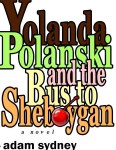
Hello people, friends and foes! What a ride writing Hunter’s Trap has been: fast, sometimes furious, most of the time scary, and always fun. I’m back for a quickie: a dear friend of mine has plunged into indie publishing and I had to share his wonderful books with you guys. So here is Adam Sydney and Yolanda Polanski and the bus to Sheboygan (come back soon for our chat over his other book).

me: Hello Adam, welcome to your first interview. Would you like to say something to my dear followers?

AS:Hi Anne, I am very honored that you would like to interview me! It’s my first interview ever, so I’m very excited, too. Thank you!

me: For those of you who don’t know, Adam and I met in England as we both completed a Master’s in screenwriting at the University of London. So, dear friend, let me hear about YOUR reasons for deciding to quit screenwriting and prose it up into novels, instead.

AS: Why did I stop screenwriting? Well, I don’t look at it as completely over, to be honest– more of a hiatus. My last two screenplays were extremely experimental (read: no one would ever buy them), and although I think that they had the most merit of the screenplays I’d written, I realized that I wanted to share my work with other people, rather than just having it sit in my computer, being all avant garde.

A while back, I went to the American Film Institute to study screenwriting, and everyone there told me that as a screenwriter, I’d make a great novelist. I’d actually tried it back then (horrible result), but three years ago, I thought I’d give it another go. I’d read The Mysteries of Pittsburgh, and in that particular edition, Michael Chabon described how he’d written the book in his parents’ basement or something. For some reason, this really inspired me, so I wrote my first novel. I enjoyed the experience so much that I’ve just kept writing prose.

 me: I always love to read your scripts and novels because you also make us root for characters that are not only original, but completely believable and real. Who would you say is your biggest influence and do you see their work reflecting in yours?

AS: I’m so glad to hear that the characters in my writing are working for you, because the characters really are the most important element to me. I try my best to step out of the picture and let my characters run the show, which really feels like a weight off my shoulders (even though that makes no logical sense).

That’s not too unusual in novels, but I think my secondary interest in story is less commonplace. I believe an emphasis on story really does help readers connect with characters in a way that nothing else can. As a screenwriter, I’ve been trained to focus on story first and foremost. But I was just at a book store yesterday in search of some newer writing (at least newer than 19th Century), and read several covers. Most of the synopses I came across for the newer, literary novels seemed to indicate that the books were really situations, rather than stories. “A group of people living together,” “a town in turmoil,” “a woman who goes back home after being away for years”– that sort of thing. I most enjoy books in which the narrative really moves forward, rather than being focused mostly on a place and the internal thoughts and feelings that occur there. I think that bias is reflected in my writing.

I wonder what my influences are! I love Jane Austen, Henry James, William Faulkner, E.M. Forster, and Edith Wharton. I think that these writers certainly develop engaging characters, but I’m not consciously inspired by any of their work. I certainly remember being inspired by films in my past and then writing similar screenplays, but that doesn’t seem to happen with my novels. Of course, that’s only as far as I can recognize it; I think that other people might be much more likely to recognize influences in my work better than I can.

Have you spotted any? I’d love to know!

me: You do have a certain vibe of Austen in your sense of humour and Faulkner would love the voice and drive you give your characters…speaking of, let’s talk a little bit about Yolanda. Now, she’s weird and unusual, which means I love her! I found myself missing her as a friend once I finished your book…can you tell me where she came from? What motivated you to write about someone who dreams of sundaes and tries to make the best out of everything, even when people think she’s totally insane?

Do you love the psychedelic cover as much as I do?

AS: At some point before writing my second novel, I remember feeling Yolanda’s personality rising up somewhere in my brain, although it was very nebulous. At about the same time, I’d decided (and this didn’t happen) that I was going to try and write a novel in which every sentence was funny, as well as the characters and situations and plot line. I almost wanted every juxtaposition of words within each sentence to be funny.

It’s an fascinating goal, but in practice, it was really hard to do. I think I really tried it in the first chapter, but even there, I realized that sometimes, in order to set up jokes and funny situations, you basically need straight lines– which kind of function as straight men. So not too long after starting it, I realized that Yolanda Polanski and the Bus to Sheboygan would need something else.

That something else became Yolanda. I found that seeing everything — and how she distorted everything — through her eyes could be funny, so the first person narrative stuck. But I wasn’t wholly satisfied with that alone and so decided to have those distortions change over the course of the book.

So in her first phase, she mistakenly believes that she can instantly deduce the past event that has since defined the psychology of each person she meets. After determining this, she then goes on to use this “knowledge” to manipulate the people to do what she’d like them to do. Of course, she’s profoundly wrong about everyone and their defining life events, so her manipulations end in failure– or at least not the success she expects. Then, when she finally realizes that her powers aren’t quite up to the task of instantaneously analyzing everyone’s psyche, she turns to her misguided understanding of Zen Buddhism to run her life. I hope that these shifts help to keep the humor up throughout the book.

But getting back to your question, I have to say that I really don’t know where Yolanda came from. As I had no idea where the story was going right from the beginning, she literally developed before my eyes. She quickly became crazy, and laughable, and terribly self-important, which I found funny. (Hmmm, maybe I based her on myself.) However, I couldn’t have a main character who’s just a kook, so she also became a fundamentally decent, kind person, too, under everything– someone who needs the people she’s found in her life much more than they need her. I don’t think I could’ve kept going if she’d just been a thin joke.

 me: What would you do if you met Yolanda in real life as a real person? Or more important, what wdo you think she’d do to you?

AS: I hope that I would recognize that she’s harmless and ultimately kind at heart, but judging by the way that other people in the novel respond to her, I don’t know if I’d be perceptive enough in person. She seems to annoy pretty much everyone she comes into contact with, at least at first.

I think that she’d only do something to me if she thought she saw something in me that led her to believe that we could be friends. She does seem to have a sixth sense in that department– if not in any other! And what would she do to me? I think it would ultimately depend on her scheme and how I could be of service.

me: Famous last words in a true Yolanda fashion?

Yolanda: It’s been a real teat speaking with you, and I hope we can do tit again soon!

Adam Sydney never takes the bus, he drives this bling of a car, instead.

Adam trained as a screenwriter at The University of London and The American Film Institute, then segued into literary fiction with his first novel, My Heart Is a Drummer, written in 2009. The following year, he completed his second book, Yolanda Polanski and the Bus to Sheboygan.This year, he’s finishing an experimental horror novel, Something’s Wrong, and has formed Newcraft Press after discovering that traditional publishing is unable to support him and the other authors with whom he’s worked over the previous 20 years. He lives in Tucson, Arizona with his dog, Jerry, and cat, Alan.


***WIN an ecopy of Yolanda Polanski and the bus to Sheboygan by leaving a comment – ONE WINNER will be contacted by leaving an email adress***


Hiatus

I’m alive, but writing about the dead.

Robert Smith, Pornography written all over him

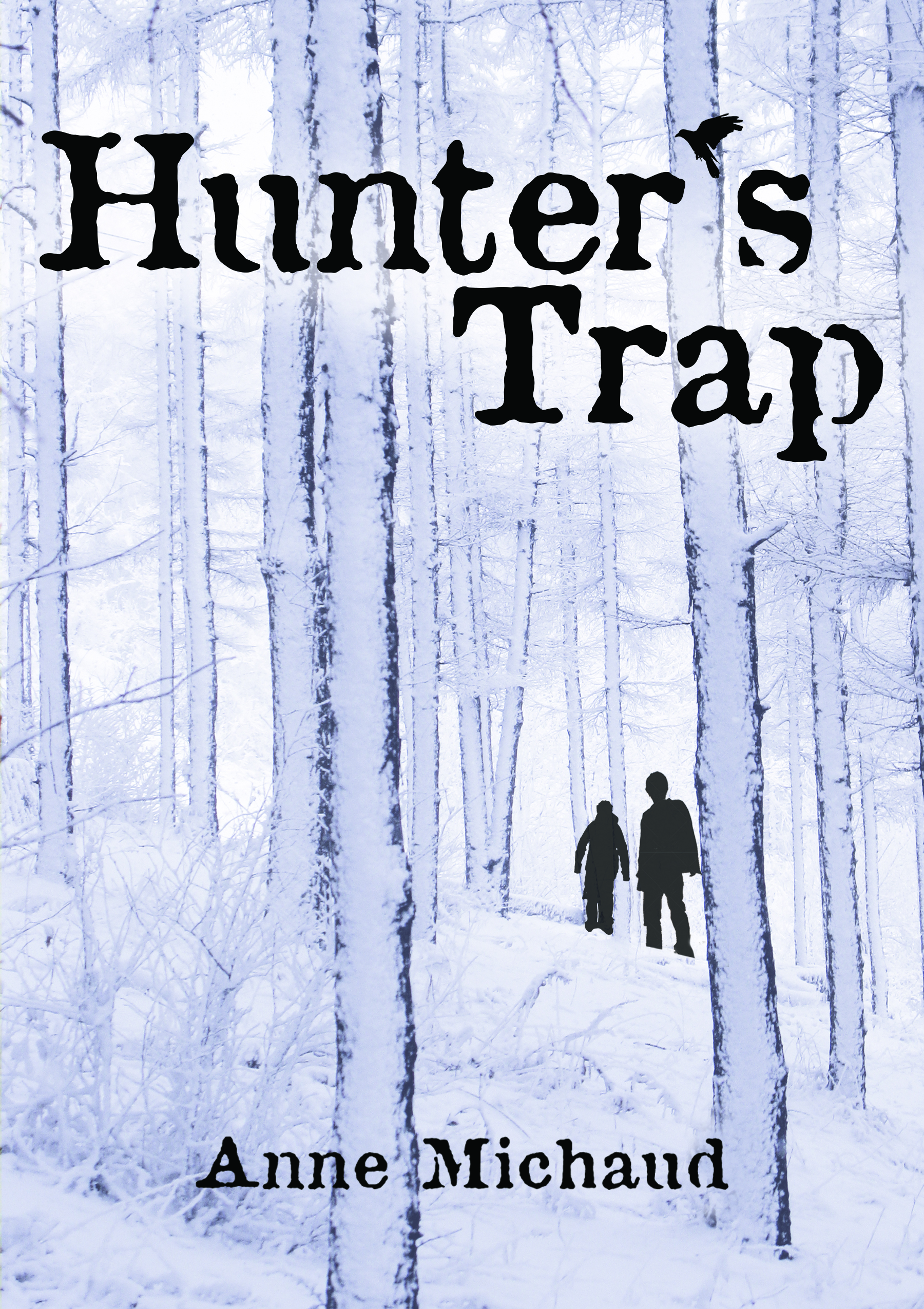
I’m obsessed with my new project about two brothers looking for their missing father in the north, filled with wild snow and vengeful ghosts. So I’m trapped  until I put an end to Hunter’s Trap.

Meanwhile, here’s some eye candy. That Mary Poole is one lucky lady♥