Author Archives: Anne Michaud

About Anne Michaud

Unknown's avatar
Author of Dark Tendency

Sister Mine

I often wonder about lights in the sky, if there’s something else than stars, planets and a map of black nothingness. Here’s my #Fridayflash spilling a hair over 1k – enjoy:)

Sister Mine

The first time you came into my room at night, you stood at the foot of my bed, motionless, clutching yourself. “They’re coming for me. You have to help me hide. And lie. But you can’t let them know you’re lying!” Dark night, the blue moon cast a shadow on your features, hiding your eyes. Opened or closed, I never knew.

That following morning, Mom found you crammed between the washer and dryer in the basement. You denied sleepwalking, all those horrid nightmares, your screams waking the whole house at least once a week. But Dad wouldn’t allow this kind of talk, he didn’t believe in psychiatrists either.

You were obviously going through something big – big enough to wake your little brother at night, subconsciously. Then you began to change, your stupid friends wouldn’t come around anymore, you began locking yourself in your room and staying in on the weekends. Mom noticed, but Dad wouldn’t hear about it, thinking it was a phase that would go away. It didn’t, but you did.

***

It took them eight months to find something, and it was nothing. A shoe in the woods at the edge of town, by the foothill where you used to read before supper on long summer evenings.

Dad changed his after work gin and tonic from less tonic to straight up. Mom pretended she didn’t see, but she was the one buying the groceries.

We had to talk about this, if not for you, for those you left behind. “She isn’t coming back, is she?’’ I asked Mom when Dad was out, wrecking the woods to find you. As if you’d materialize safe and sound, and he’d bring you where you belonged. Our Dad, our hero.

“Don’t ever say that.’’ She stopped scrubbing the invisible spots on the kitchen counter and turned to me with dead eyes: someone had taken you and it was too late. “Christopher, go do your homework. I’ll take care of this mess.’’

She’d been cleaning that kitchen for hours, no mess left to scrub.

***

You’d been gone for eleven months, two weeks and five hours. Mom still hoped, Dad still drank, and I thought I’d never see you again. Forgetting was our new family motto, although no one ever spoke it out loud. But not me, I wouldn’t forget you.

‘’To Jenny,’’ I raised my glass of milk for your birthday, and everything went silent for a second. I don’t even know why I said it, I guess I felt you.

The lights flickered, the entire house buzzed for a good three seconds. And this weird noise, like we were about to blow up. Then, a black out.

Mom and Dad checked the fuse box, but I stayed at the kitchen table, finishing my macaroni and cheese. I guess it’d be hard for Mom to stop cooking what you asked for year after year.

Our parents ran around the house as if we lived in nuclear times, under attack from invisible forces. Maybe they felt you, too, and wanted to get away as fast as possible—because if we felt you in the room but you really weren’t there, it meant we’d lost you forever.

***

That night, I heard something strange. I went to the window, and in the sky, a star shined brighter than the others. It turned a paler shade of blue, pink, and yellow. The colors of a rainbow, on your birthday, from you to me.

“Jenny…” I prayed and wished you’d hear me.

The star turned into a million of them, a piece of the sky detached itself from the endless map, and a pyramid of lights danced. The sky fell that night, beautiful and frightening.

I never mentioned it, but every other night, one of the stars glittered more than the others. Sometimes, when I got lucky, it turned pink. Your favorite color.

***

The policemen came once, shoulders low and faces grave. They had bad news, they didn’t have time to step inside, refused coffee and cake. Mom and Dad stood side by side, waiting. Did they find your body? Had you gone from missing to dead?

The case was to remain open for five years, but the searches were non-conclusive. They offered counseling schedules and a package. Great, they’d brought a present. More like a bomb, in our house.

They left one minute after that. Dad stayed downstairs and Mom went to their bedroom’s en-suite. She got into the shower, her sobs louder than the water. I stayed in my room, waiting for someone to tell me it was a joke, that you were okay, just a runaway in a cool city, waiting for me to join you.

***

Two years, three months, eleven hours, that’s how long it took you to get me. I’d changed schools and had a piercing, but none of it mattered that much.

“Christopher.” Clear with every syllable, waking me in the middle of the night, like you used to. “Christopher.” Every hair on my body stood on end. “Look into the sky.” Your voice, Jenny.

The summer wind gusted and lashed the trees lining the street. I opened the window, letting in the hot air, my curtains shifting, their shadows eating my walls. The A/C went out with the power in our house.

I shook from head to toe, but couldn’t look away, couldn’t ask the voice to stop. I felt you; I sensed you close to me. And you repeated for me to: “Look into the sky, Christopher.”

The stars moved, changed, soft blue, pink, yellow, twisting and turning, making me lose all perspective. Massive as it came down, and silent, like a summer storm: a spaceship.

‘’I’m scared.’’ Barely a whisper, but you heard me. You always did.

‘’Don’t be. We’ll be together.’’ And then, as if I doubted the voice wasn’t yours, ‘’Journeys may end and nights might fall, but Brother, you will always be loved.’’

‘’And through the hardship of rain and the sorrow of dreams, you will always remain Sister mine.’’ I’ve remembered these words ever since you first read them to me at bedtime, back when I was a kid and you were my world.
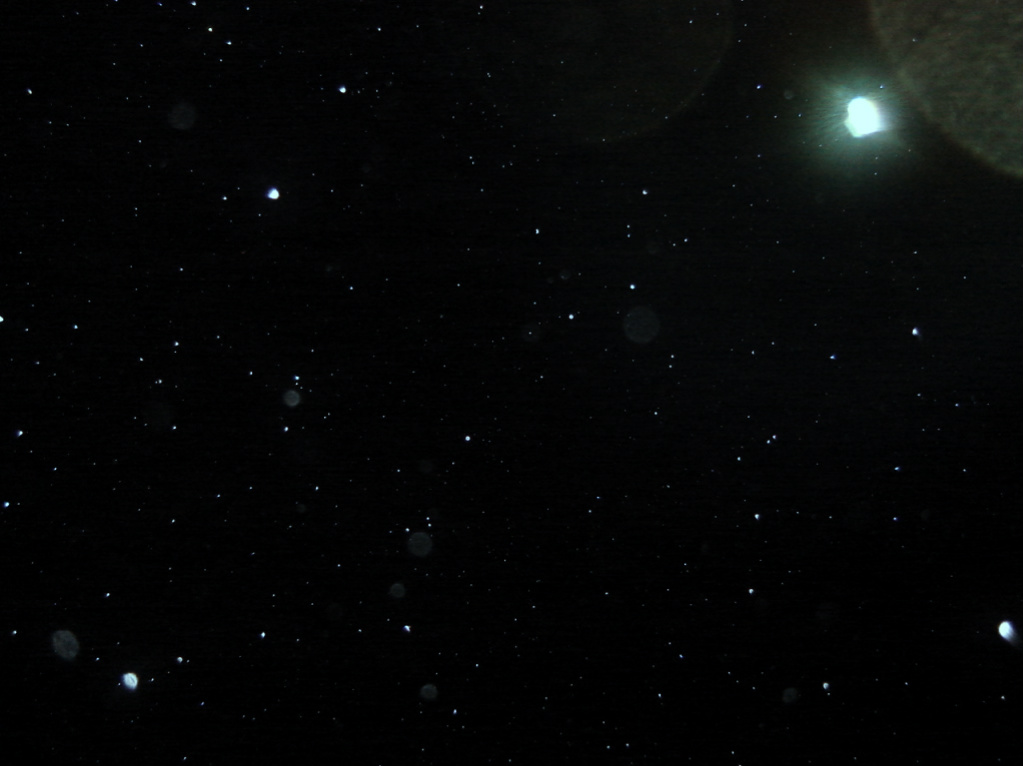
Home in the stars

I’d never be alone again, Jenny, because I joined you. The stars became my home, and I turned them blue just for you.


Chatting with Rusty Fischer

It’s impossible not to encounter @ruswriteszombie on Twitter or the blogiverse, and since zombies don’t write, I just had to ask him to speak in their name!

AM: I loved your novella Ushers, Inc -what inspired you to write such a funny/creepy story?

Rusty Fischer: It just seemed like such a fun “mashup” of genres. I was able to put my love of writing and reading YA together with the cheesy, late night, B-monster movies I love so much. I also got to add zombies, vampires AND werewolves in the mix and let these “geeky” kids use their movie knowledge to become a real strength when no one else – not the cops, the government, not even the Marines – can stop the monsters.

AM: The way you present yourself as a writer is quite astonishing: accessible, always helpful, and a huge zombie fan. What motivates you to have such a strong presence on the web?

Rusty Fischer: Two words: I’m shy! Like, painfully shy. But I’m also a former teacher and it’s very important for me to write YA and still try to foster reading in young adults. So promotion is very important to me, but can get difficult when I have to, you know, actually leave the house! But now I can do so much online, without standing around looking gawkish and uncomfortable. I can speak freely and share my opinions and blog about publishing advice and host giveaways or write guest posts and people can either respond or not. It’s great!

AM: That’s a great advantage to have been a teacher first, you know exactly what these kids go through – not that you’re old enough to not remember how it was when you were a kid, but times are changing so fast… Will you ever consider writing for adults and in other genres or will you stick to horror YA?

Rusty Fischer: I actually do write for adults. This year my first-ever adult contemporary romance comes out from Aspen Mountain Press. It’s a Christmas romance. So about half the year I spend writing YA supernatural horror-slash-romance and the other half it’s adult contemporary Christmas romance. So… try figuring that out.

Basically, after decades of chasing trends and trying to “fit” in here or there with this publisher or that, and getting rejected each and every time, I said, “You know what? No one’s reading this stuff anyway, so… why not write exactly what you want, have fun with it and maybe one day folks will read it?” So that’s what I did and, I like to think, that’s what I’m still doing.

Rusty blogs and give plenty of free goodies for authors, too!


Chatting with Julie Campbell

Another great author met through a writers forum…

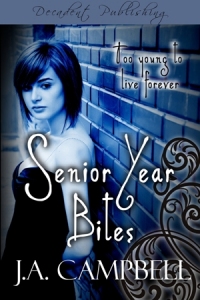
AM: I really loved the premise of Senior Year Bites and how fresh it felt to 1)not have a love triangle 2)find real girls with real friendships 3)a pov on vampirism we rarely get. Where did you get your inspiration?

Julie Campbell: Well, to keep it short, a lot of the love triangles bug the crap out of me. Teaser: There is some relationship tension and betrayal, or perhaps just perceived betrayal, in the second novel. The real friendships I stole from a middle school and high school friendship I had with two other people. Obviously it is not completely the same, but I based it off of my experiences. The POV on vampirism was me reacting to something I was missing in novels. Most of the vampire novels are not from the vampire’s POV and I wanted some more. So I wrote one. Actually, I’ve written several, but this currently the only one getting published that is from a vampire’s POV.

The actual idea from the novel came from a dream I had about a girl who got changed into a vampire her senior year of high school. Mostly on a whim I decided to write a few pages (a friend also wrote a few pages with that prompt and we compared to see how different they would turn out. They were quite different). The few pages turned into a novel.

AM: I’m so glad you’re mentioning your sequel, because for most writers, going back to a story after publication for its second installement is rather tedious. How are you tackling it? Do you keep a SYB bible close by?

Julie Campbell: I actually love sequels. It gives me more chances to play with characters I love. I have a really good idea of where I’m going with the sequel to Senior Year Bites. Right now it is titled Summer Break Blues. I started writing before I created a SYB bible, but I have recently read SYB a million times for edits so I remember most of the details. I also have notes on characters, events, and all that and that is helping me keep things straight (so like a mini-bible). I have plans to create a true SYB bible now that I have a little time to think. Sequels are fun, but keeping track of everything can be tough.

AM: Great title, love how you keep the same vibe throughout. Does it mean you’ll treat us with a third book in this series? If so, do you know what it’ll be about and if not, what will you be working on next?

Julie Campbell: I have a third book planned, though I have no idea how I’m going to keep the title theme going. I’m sure something will come to me. If the third book goes well I do have some ideas for more books in the series as well, though it would likely focus on other characters. The main characters from the first three would end up being supporting characters at least some of the time. The book I’ll be working on next after Summer Break Blues will be the second Tales of the Travelers (Arabian Dreams) novel.

AM: Please tell me how you got inspired for Arabian Dreams – I already know, but want to share.

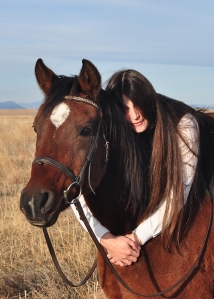
Julie Campbell: I was out trail riding on my Arabian horse, Sabaska, and I always have this feeling like I’m getting transported to other worlds when I ride with her. I thought it would be fun to write a novel about a girl who travels to other worlds on horseback and has fantastical adventures. The idea originally started out as a series of connected short stories, but in the way of things it turned into a novel instead.

Julie Campbell shares her thoughts and developing projects on her blog, too.


Bleeding Dry

After a very short break from my #Fridayflash, here’s a story I wrote right after the oil rig disaster that struck America last year. 

Bleeding Dry

An island of metal and steel, cold and lifeless – felt like his, anyway. Nothing but the ocean, deep and frightening, sharp around the edges, burned up by the rising sun. Roger took a picture; Jenny would love this, his last sunrise. Heck, maybe she’d even find it romantic.

After thirty-five years with the same company, they called it anticipated retirement. He still had a couple good years left in him, but Roger wouldn’t fight a lost battle. When he compared himself to others, he had it good; they let him off easy.

‘‘What do you want me to do, Rog?’’ his boss had said, in that high-pitched voice that always sounded like nagging. ‘‘My hands are tied. They gave me no choice, them up there. They said: it’s either the rednecks’ supervisor or some kid who can do the job just as well. What do you want me to do?’’ The final blow, the one that made Roger regret the whiskey he’d given him for Christmas. ‘‘You’ve had it good, it’s time to give up your spot to someone younger. It’s only fair.’’

Could be his age, could be the fact that his bags were packed – whether he wanted to or not – but he felt a shift in the air. Palpable, something gone wrong. He would leave it at that, not really knowing what caused the feeling. After what happened on Monday, then again on Friday… Mentioning it to his boss didn’t get him anywhere but ‘‘forget it, not your problem, not your fault.’’

It wouldn’t go away, he couldn’t forget. People talked, questioned his work ethic. When he walked into a room, they stared at him. And that silence… so heavy with unspoken words. They thought he let it happen, he supervised the horror, revenge for getting laid off. The rumors quieted down, but not everyone believed in his innocence.

His last week had been bloody: two deaths in five days. One man had drowned – shark shit by now – and the other had been ripped to shreds by a pipe drop, right in front of him. Roger had never seen something like that, not in his lifetime. He struggled not to play it over and over again in his mind; bones ground to dust, flesh to a pulp. Joe Johnson or something of the like, he couldn’t remember the new kid’s last name, but his cries wouldn’t leave his head.

Roger had thought about pleading with his boss for two years at eighty percent, just so he could stay on the job. Two men were gone; he could stay for the company now. Too late, though. The papers ending his contract were signed, the chopper scheduled in the morning to pick him up. ‘‘A waste of breath,’’ Jenny would say.

Photograph stolen from The Telegraph

A man's island

Five more minutes, he’d be late in two, but he didn’t care: this he considered his farewell party, alone with the sea, the grinding rig almost silenced by the strong Nordic wind and the hypnotic waves. Anyway, he didn’t feel like cake and coffee, he wanted to breathe in the salty air, take it with him, back on land, back home. But who was he kidding? This always been his home.

He avoided looking at the huge platform beneath his boots, the long neck moving up and down, the pumping sound, grabbing something underneath, something that wasn’t theirs to take. He had never liked how the drill violated everything, how it raped life. The smell clung to his clothes, and his heart pounded at the thought of being stranded with nowhere to go. He never thought he’d last so long on the rig, but he had.

‘‘Roger.’’ A static cry broke the moment, his CB hanging low by his thigh. ‘‘We got a problem.’’ They always had a problem until he showed up and made it all better. What would they do without him?

He stole one last look at the ocean, the one thing he’d remember most, as the sky turned from blue to bright, from dawn to yellow, pink and mauve. On the horizon, dark clouds ate the colors, turning them grey. He snapped another picture, for Jenny, who had never left Nebraska. With a deep breath disguised as a sigh, he vanished inside the rig, the door clanging shut behind him.

A group of men rushed out, their bright yellow overalls covered in thick red goo. It smelled like iron, reminding Roger of Joe. Another accident? Who died, now?

‘‘What the…’’ Roger didn’t finish his train of thought. He didn’t have to since most of the men and a few women stood before him, blocking the way. Heads bowed, eyes on the pump as it slowed, solemn as they stared.

At first, Roger recognized a joke, a gesture for his departure, but no one laughed. Not in the least. The pump should never stop, time meant money and each wink of this bad boy brought thousands for the company. Something major, something big must have happened.

He pushed the rednecks away to get to the heart of the problem, his boss squatting on the greasy floor, not one inch of his overalls spared from the crimson fluid. Roger opened his mouth to say something, but words failed him – but his eyes, he couldn’t take them off what he saw, couldn’t look away. They all continued to stare, everyone, refusing to believe, to say it out loud.

No petrol being pumped up, no black gold. Impossible, surreal, worse than anything they’d ever seen. Right there, before them: blood.

From its core, the planet bled.


Chatting with Seleste deLaney

I’ve met Seleste deLaney over this wonderful forum full of writers and have noticed her quick wit and readiness to always help a friend in need…and she’s quite the writer, too.

AM: I didn’t really know what to expect reading Badlands –being classified under ‘romance’ sub-genre and all– but I found the steampunk and action elements so strong, it made me wonder: was the developing relationship between your two main characters planned or did it just happen as you wrote the story?

Seleste deLaney: Thanks for the compliment! Actually, the romance was planned from the beginning. Personally, I like stories where there’s a really even balance between action, non-action drama, world-building, and romance, so that’s what I strive to write. It’s frustrating for me as an author because some places label Badlands only as steampunk, and a lot of steampunk fans were irritated by the romance. Hence, I’m really glad most places have the proper label on it LOL.

AM: I keep asking myself what identifies a story as romance, because sex scenes are present in most novels nowadays. Could it be that in the romance genre, the male counterpart cares more deeply and shows more feeling than in literary novels? How do you as a writer decide: ok, this is romance, because…

Seleste deLaney: For the most part, I’m a plotter, so romance is woven in from the earliest stages. I was once told that unless the love story between the main characters WAS the primary plot, it wasn’t a romance. Personally, I don’t believe that. For me, it qualifies as a romance if falling in love is a major plotline and on a level at or very near the external conflict. That may or may not mean sex. But in the case of Badlands, the heroine has a specific set of ideas about sex, love, and men. Her change in viewpoint (brought on in part by an unexpected sexual attraction) is another defining characteristic of a romance: where falling in love changes one of the characters in a substantial way. In general, I look at it like this: if you can take out the characters falling in love, and it doesn’t alter the plot and/or climax, then it isn’t a romance. The characters falling in live needs to be integral to the story as a whole. After all, people don’t fall in love isolated from the rest of their lives.

AM: I couldn’t help but totally get immerse into Badlands’ world: women rule part of the country, it’s dusty and dry like the Wild West, and the techno-steam is the right amount of punk. Where did you gather the inspiration for it, and how do you plan to keep it going for the second instalment?

Seleste deLaney: The story was inspired by a piece on DeviantArt that someone said reminded them of me. It was this lone woman on the top of a cliff, streaked with blood, weapons by her side…and I knew I had to tell her story. As far as keeping it going, the second story is Henrietta’s, so the way we see the Badlands is a little different. It’s an outsider’s image rather than someone who has known it all her life. Plus, there’s more ground travel involved (though the Dark Hawk is still in it), so we get to see different sections of the landscape.

AM: I love companions – can’t wait to read Henrietta’s story!! Last questions: why did you adopt a nom de plume, and what inspire you to become Seleste DeLaney?

Seleste deLaney: I decided to write under a pseudonym because I also write YA. My identities aren’t a secret, but I wanted to ensure that teen readers didn’t pick up my adult stories accidentally. As for choosing the pen name, the first part was easy. Seleste is a variation of the name I’ve been known by online for years (as well as my Pagan name). The last name was a combination of things. First, I wanted to pay homage to my favorite author and the woman who encouraged me to pursue publication, Kelley Armstrong, so a friend and I were going through the last names of her minor characters, looking for a last name that fit well with Seleste. When we ran across Delaney, I knew I wanted that one since the main character in the first novel I worked on when I got serious about my writing was named Delaney Craft. (It was only after I chose the name that Kelley’s The Gathering came out and it ended up Maya’s last name was Delaney, which killed my whole “minor character” plan LOL).

Seleste’s books are available here and Julie Particka’s here. Yes, they’re one writer, but the genres are quite different.


Chatting with Tori Scott

Thanks to Twitter, I have met an awesome author: Tori Scott.

AM: Reading Four Houses, I wondered if the deconstructed narration inspired you to write the story first or did you think of your plot the ‘traditional’ way and then explored with structure?

Tori Scott: I started by thinking of the plot the traditional way. I was actually listening to a trippy song and had this vision of a girl standing before two houses. The more I thought on it, the more I liked the idea of the girl being surrounded by houses, and those houses being choices. Later that night, I was lying in bed thinking about the story. Then it just hit me, and the idea for the more unique structure was born.

AM: The broken narrative works so well with the creepy atmosphere. I’m ALWAYS listening to music when I write–I cannot function without it, and depending on the scene/story I’m writing, I play different genres/bands. A fight scene develops so well with Nine Inch Nails, Skinny Puppy and Front Line Assembly, and when I need a sad mood, The Cure, Bauhaus and Chameleons UK provide such rich textures…

I need to know: What was the song–and more importantly, are you often inspired by music? If so, which bands, and do they influence what you write?

Tori Scott: I actually have no idea what the name of the song was. I heard it at a restaurant and spent three days trying to find it online before giving up. Like many writers, music is definitely a source of inspiration. I use it more for particular scenes than I do for entire books or ideas. For example: I listened to Limp Bizkit’s Break Stuff for a recent fight scene. Overall, I like harder rock: System of a Down, Nirvana, Linkin Park. Stuff that gets your blood pumping and the creativity flowing.

AM: Speaking of creativity, you and I share a love of the dark — how did you come about the horror genre?

Tori Scot: Growing up, I watched my mom read everything horror. She is a huge Stephen King fan. On top of that, both she and my sister love horror movies–the bloodier, the better. I also have a love for dark elements, but my work isn’t quite as extreme. I’d say my writing has a touch of dark, whereas a writer like Stephen King is immersed in it.

AM: So should we expect your debut novel to give us chills like your short story Four Houses does?

Tori Scott:My debut, should it get picked up (my agent plans to submit it in September), is more of a dark comedy. Meaning it’s meant to make you laugh, but you know you shouldn’t. It also has romantic elements weaved in. So, it’s a bit of a mixed bag.

Tori is represented by Laurie McLean of Larsen-Pomada Literary Agency and you can follow her on twitter and her website.


Forlorn

I have decided to participate to this week’s Flash Fiction Friday, because the picture was so evocative, heartbreaking and real, this story burst into my mind.

FORLORN

The plane’s cargo hold filled with screams and cries. Soldiers piled more people inside, the air stale with fear. They held machine guns and wore masks, their shiny boots crushing fingers, hands and feet. They pushed and shoved, gave bruises and wounds.

‘‘Daddy, he’s coming now.’’ The girl’s voice broke, tears falling down her face reddened by the wasted run—no one could escape the Army. ‘‘I need to push,’’ she said, eyes closed and chin tucked in as she cried in the surrounding madness.

The old man held her hand, shocked by their brutal arrest, by what was to come.

‘‘Daddy, help me!’’ she cried out, the people around them making way for her spread legs, blood and other fluids leaking out of her. The smell of booze and unwashed bodies was so pungent the old man covered his nose with his spit rag. ‘‘Promise me you’ll hide him well.’’ With her painful words, his trance broke.

The old man stood up, even if he’d been told to stay down and shut it. He grabbed a soldier’s arm and pulled. ‘‘Darla is having her baby.’’ Never good with words, he feared his voice got lost in the roaring of the engine and the gusts of wind coming from the closing cargo hold. ‘‘Got a doctor?’’ Like the Army would keep one to check on the hobos they forced to fight on the war fronts.

When the soldier brushed him off, the old man lost it. He screamed, ‘‘You have no right to keep us here! We are New American citizens!’’

‘‘What the hell is holding up my plane?’’ A general advanced from the cockpit. ‘‘You the trouble maker?’’ An oxygen mask covered his face, the stink too much for his rank.

The old man noticed his daughter unconscious on the floor. He sank next to her, gently tapping her cheeks to wake her up. Tears fell from his face and joined hers.

‘‘Get them out, the both of them. Waste of space, she’s dead and he can’t walk straight,’’ the general ordered, and soldiers grabbed the girl roughly, her head dropping to her chest.

‘‘Darla!’’ the old man shouted, but she didn’t open her eyes. ‘‘Darla, wake up!’’ But fright seized his throat and squeezed it shut, letting nothing more out. The old man wanted to scream, to run, to keep her safe, but he was too late.

The soldiers pushed them out of the cargo hold, and the old man landed hard on the makeshift runway in the field. After the soldiers threw her out, the girl’s eyes remained closed, her fists clutched to her belly, nothing moving inside. The old man rocked her just like he had when he’d found her as a baby, left in the trash to die. Back then, he’d promised himself to never let her die.

‘‘Don’t leave me alone,’’ he repeated until it became a lament in the middle of the cornfield, miles from the Macro-City.

The plane lifted off with sounds of chaos, the old man hoping it would wake the dead. ‘‘Darla?’’ No use, she was gone, with the baby still inside her.

*

The old man ran, the pain from his knees shooting up and down his weak legs. He thought someone was following him, but it was his own rattled breath bursting out of his mouth.

Tears didn’t come up, even after he left Darla’s body in the field, no time for a grave since soldiers, planes and spotlights infested the place.

He kept to the ditches, deep enough for cover when Army trucks lifted dust from the roads. He prayed for the night to engulf him, so easy to disappear in a Macro-City of millions but so hard when surrounded by nothing.

‘‘Smells like trouble,’’ he’d said to Darla when she found out about the baby inside her. She would love him just like the old man had loved her; he’d saved her from a life of nothingness. So he’d helped her any way he could: found better food for her, even got a teddy bear for the baby and stashed every penny he found—where was the money? He’d need it to get away, to survive.

*

The dump crawled with soldiers searching for unwilling recruits, their weapon muzzles aimed at the darkest corners. Media Screens blared news about the courageous souls heading to the fronts, forgetting to mention how these were homeless people kidnapped to go.

The old man kept to the side alleys, away from the boulevards. He passed by Sally’s corner and noticed her gone—impossible, she peed where she slept to keep her good begging spot. He checked Ricky D’s palace by the dumpster but no more couch, no more broken TV set. The Army got everyone he knew.

The park square he’d called home for the past twenty years had been raided and destroyed: boxes flattened to the ground and litter rolling in the stuffy breeze. He saw it, his dejected box, by the manhole in the ground. If only he could reach it…

‘‘Hey you, stop right there!’’ one of the soldiers called to the old man.

This was his territory, his Macro-City: he knew every way out. Screw the money, he’d been surviving without it long enough.

‘‘Stop or I’ll shoot!’’ the soldier shouted, but the old man had already scampered into the side alley leading to the underground station.

He slid into the subway station and crushed his body to the Ads Screens under the stairs. The train slowed to a stop and he sat down by the door, waiting for soldiers to come and take him away. But the doors closed, he was safe for now.

Picture taken on the New York subway by Thomas Pluck

His beloved Darla was gone. Back to being alone. Sooner or later, the soldiers would catch him. War raged inside him, he saw the enemy everywhere he looked. If only he could disappear and forget the daughter he called home.


Chatting with author Angela Addams

After reading your novella Ghost Bride , I couldn’t stop thinking of your interpretation of the after-life. We’re not talking about a little haunting, here, but a complex multi-dimension world where witches and Gods mix up with dead humans and soul mates. Where did it all come from?

Angela Addams: Anne, thanks for including me in this chat! Great question – the idea for Ghost Bride came to me while driving to work early one morning. The radio station I was listening to that day was giving an account of a string of murders that had happened in China that were believed to be the result of families paying big money to find the ghost bride for their dead young men. Gruesome, I know, but it got me thinking – what if I had a heroine who suddenly finds herself married in the afterlife to someone she doesn’t know? I could have made it very horrific I suppose, but I wanted to take my story in the romance direction so I opted for no murder – my heroine dies in a car crash. After coming up with the idea, I did a little research and learned everything I could about the tradition of Minghun – and then I started inventing my own world.

AM That’s cool; you inspired yourself from another culture and mold it into your own creation. I often find that little bits of information can spark an image that snowballs into a story – like what the Minghun did for your Ghost Bride. When I said I loved the world of it, you admitted your stories usually don’t have that much romance. Do you give yourself space to experiment different genre or do you prefer to stick to what you feel more comfortable with?

Angela Addams: Actually, when it comes to writing novellas or, as I call them, shorts, I tend to gravitate toward erotica but Ghost Bride started off with a different tone for me and I wanted to explore that – even if it meant more low key sensuality rather than explicit sexuality. I actually quite like writing romance, but I am flexible and try to explore other genres. The very first novel I wrote (which will forever stay trunked) was historical fiction and the manuscript I’m working on now is paranormal with a romantic subplot. I’ve had a few ideas that I know would manifest into horror. I don’t think I could ever leave the paranormal completely though – it’s too entrenched in my life to not colour my creative worlds in some way.

AM Your love for the paranormal does transpire through your work…what started it? Which book?

Angela Addams: What started it? Lol – I was born this way! I can’t remember a time that I didn’t love all things paranormal. My favourite book as a child was called The Good Little Witch and I made my parents read it to me so many times that it suddenly disappeared!

With my writing though, I didn’t start focusing exclusively on paranormal story lines until a friend of mine said to me, “Hey, you love supernatural themes so much, why don’t you write a novel with all that Halloween stuff going on?” It was like light bulb went off at that moment – duh, yeah, why don’t I? So, that’s what I did. I was on my first mat. leave and I sat down and plotted out a novel that featured an organization of witches. It was that manuscript that landed me my first agent – which eventually lead to my current agent and the manuscript I’m working on now with her.

Angela Addams is represented by Sarah Heller of the Helen Heller Agency, and her books Ghost Bride, Assassin and The Temptress are available in all e-formats at Cobblestone Press.